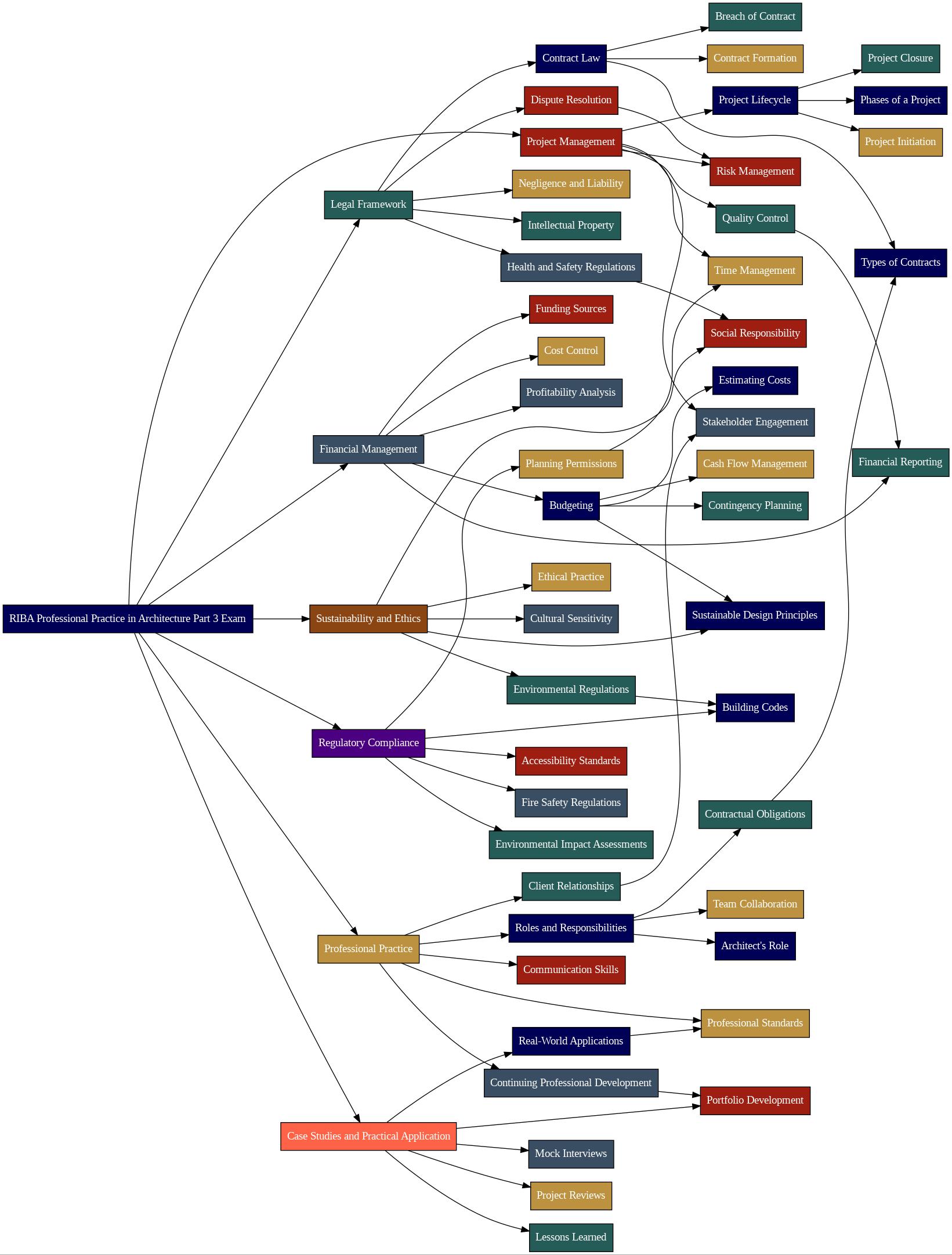
Quiz-summary
0 of 30 questions completed
Questions:
- 1
- 2
- 3
- 4
- 5
- 6
- 7
- 8
- 9
- 10
- 11
- 12
- 13
- 14
- 15
- 16
- 17
- 18
- 19
- 20
- 21
- 22
- 23
- 24
- 25
- 26
- 27
- 28
- 29
- 30
Information
Premium Practice Questions
You have already completed the quiz before. Hence you can not start it again.
Quiz is loading...
You must sign in or sign up to start the quiz.
You have to finish following quiz, to start this quiz:
Results
0 of 30 questions answered correctly
Your time:
Time has elapsed
Categories
- Not categorized 0%
- 1
- 2
- 3
- 4
- 5
- 6
- 7
- 8
- 9
- 10
- 11
- 12
- 13
- 14
- 15
- 16
- 17
- 18
- 19
- 20
- 21
- 22
- 23
- 24
- 25
- 26
- 27
- 28
- 29
- 30
- Answered
- Review
-
Question 1 of 30
1. Question
Ms. Devi, a registered architect in Singapore, is designing a new commercial building for Mr. Tan. Mr. Tan has emphasized the importance of cost-effectiveness due to budget constraints. Ms. Devi’s firm has a long-standing relationship with “Supplier A,” a building materials provider, which offers a discount to her firm on all purchases. While Supplier A’s materials are generally of good quality, Ms. Devi is aware that other suppliers in the market offer similar materials at potentially lower prices. She is concerned about a potential conflict of interest. According to the Singapore Institute of Architects (SIA) Code of Professional Conduct and the Building Control Act, what is Ms. Devi’s MOST appropriate course of action to ensure ethical practice and regulatory compliance?
Correct
The scenario involves an architect, Ms. Devi, facing a complex ethical dilemma. The core issue revolves around a potential conflict of interest arising from her firm’s long-standing relationship with a supplier, coupled with the client’s explicit request for a cost-effective solution. The Building Control Act and the Singapore Institute of Architects (SIA) Code of Professional Conduct emphasize transparency, integrity, and the prioritization of the client’s interests. Ms. Devi must navigate this situation carefully to avoid compromising her professional ethics. The key to resolving this dilemma lies in full disclosure and informed consent. Ms. Devi should inform her client, Mr. Tan, about her firm’s existing relationship with the supplier, explaining the potential benefits (e.g., familiarity with products, streamlined communication) and potential drawbacks (e.g., bias towards the supplier’s products, potentially overlooking more cost-effective alternatives from other suppliers). She should then present Mr. Tan with a range of options, including those from other suppliers, outlining the cost, quality, and suitability of each. This allows Mr. Tan to make an informed decision based on his priorities. If Mr. Tan, after being fully informed, still prefers to use the supplier with whom Ms. Devi’s firm has a relationship, Ms. Devi should document this decision and proceed accordingly, ensuring that the selected products meet all relevant building codes and regulations. If Ms. Devi feels that her firm’s relationship with the supplier unduly influences her judgment or that the supplier’s products do not meet the client’s needs, she should decline to specify those products and explain her reasoning to Mr. Tan. Ignoring the conflict of interest, failing to disclose it, or unilaterally deciding on the supplier without the client’s informed consent would be breaches of professional ethics and potentially violate the SIA Code of Professional Conduct and relevant sections of the Building Control Act related to professional responsibilities. It is also important to consider potential liabilities arising from the choice of materials and ensure appropriate professional indemnity insurance coverage.
Incorrect
The scenario involves an architect, Ms. Devi, facing a complex ethical dilemma. The core issue revolves around a potential conflict of interest arising from her firm’s long-standing relationship with a supplier, coupled with the client’s explicit request for a cost-effective solution. The Building Control Act and the Singapore Institute of Architects (SIA) Code of Professional Conduct emphasize transparency, integrity, and the prioritization of the client’s interests. Ms. Devi must navigate this situation carefully to avoid compromising her professional ethics. The key to resolving this dilemma lies in full disclosure and informed consent. Ms. Devi should inform her client, Mr. Tan, about her firm’s existing relationship with the supplier, explaining the potential benefits (e.g., familiarity with products, streamlined communication) and potential drawbacks (e.g., bias towards the supplier’s products, potentially overlooking more cost-effective alternatives from other suppliers). She should then present Mr. Tan with a range of options, including those from other suppliers, outlining the cost, quality, and suitability of each. This allows Mr. Tan to make an informed decision based on his priorities. If Mr. Tan, after being fully informed, still prefers to use the supplier with whom Ms. Devi’s firm has a relationship, Ms. Devi should document this decision and proceed accordingly, ensuring that the selected products meet all relevant building codes and regulations. If Ms. Devi feels that her firm’s relationship with the supplier unduly influences her judgment or that the supplier’s products do not meet the client’s needs, she should decline to specify those products and explain her reasoning to Mr. Tan. Ignoring the conflict of interest, failing to disclose it, or unilaterally deciding on the supplier without the client’s informed consent would be breaches of professional ethics and potentially violate the SIA Code of Professional Conduct and relevant sections of the Building Control Act related to professional responsibilities. It is also important to consider potential liabilities arising from the choice of materials and ensure appropriate professional indemnity insurance coverage.
-
Question 2 of 30
2. Question
Lim, a registered architect, is approached by Tan, a property developer, during a casual meeting at a local architectural event. Tan is currently developing a high-end residential complex and expresses dissatisfaction with the current design specifications, particularly concerning the integration of sustainable building practices required to achieve a high BCA Green Mark rating. Tan subtly suggests that if Lim were to “re-evaluate” certain design elements to make them more amenable to Tan’s construction company’s existing practices – potentially overlooking some of the more stringent Green Mark criteria – Lim would be “handsomely rewarded” with a significant bonus upon project completion, paid directly and discreetly. Lim suspects this would involve specifying materials that are cheaper and easier to install but less environmentally friendly, and potentially skirting certain energy efficiency requirements. What is Lim’s most ethically sound and professionally responsible course of action according to the Singapore Board of Architects’ code of professional conduct and relevant building regulations?
Correct
The scenario presents a situation where an architect, Lim, is approached by a developer, Tan, with a proposition that could potentially compromise Lim’s professional integrity and objectivity. Tan offers Lim a substantial financial incentive to subtly alter the design specifications of a residential project to favor Tan’s construction company, even if it means potentially overlooking certain regulatory requirements related to sustainable building practices mandated by the Building and Construction Authority (BCA) Green Mark scheme. The core ethical issue here revolves around conflict of interest and the architect’s responsibility to uphold the public interest and adhere to professional standards. According to the Singapore Board of Architects’ code of conduct, architects must avoid situations where their personal interests (in this case, financial gain) could compromise their professional judgment. Accepting Tan’s offer would not only violate this principle but also potentially lead to non-compliance with building regulations, which could have legal and ethical repercussions. The correct course of action for Lim is to refuse Tan’s offer outright. This demonstrates integrity, protects Lim’s professional reputation, and ensures that the project adheres to ethical and regulatory standards. It also safeguards the public interest by ensuring that the building is designed and constructed in a sustainable and compliant manner. While reporting Tan’s offer to the BOA might seem like a good idea, the immediate priority is to reject the offer to avoid any appearance of impropriety or compromise. Documenting the interaction is also important for record-keeping and potential future reference.
Incorrect
The scenario presents a situation where an architect, Lim, is approached by a developer, Tan, with a proposition that could potentially compromise Lim’s professional integrity and objectivity. Tan offers Lim a substantial financial incentive to subtly alter the design specifications of a residential project to favor Tan’s construction company, even if it means potentially overlooking certain regulatory requirements related to sustainable building practices mandated by the Building and Construction Authority (BCA) Green Mark scheme. The core ethical issue here revolves around conflict of interest and the architect’s responsibility to uphold the public interest and adhere to professional standards. According to the Singapore Board of Architects’ code of conduct, architects must avoid situations where their personal interests (in this case, financial gain) could compromise their professional judgment. Accepting Tan’s offer would not only violate this principle but also potentially lead to non-compliance with building regulations, which could have legal and ethical repercussions. The correct course of action for Lim is to refuse Tan’s offer outright. This demonstrates integrity, protects Lim’s professional reputation, and ensures that the project adheres to ethical and regulatory standards. It also safeguards the public interest by ensuring that the building is designed and constructed in a sustainable and compliant manner. While reporting Tan’s offer to the BOA might seem like a good idea, the immediate priority is to reject the offer to avoid any appearance of impropriety or compromise. Documenting the interaction is also important for record-keeping and potential future reference.
-
Question 3 of 30
3. Question
Ar. Li Wei is the appointed architect for a high-end residential project commissioned by Mr. Tan. During the design phase, Ar. Li Wei identifies a specialized facade material that he believes is perfectly suited for the project’s aesthetic and performance requirements. However, Ar. Li Wei is also a shareholder in “Facade Solutions Pte Ltd,” a company that manufactures and supplies this specific facade material. He did not mention this to Mr. Tan previously. The material is slightly more expensive than comparable options, but Ar. Li Wei genuinely believes it offers superior quality and longevity. According to the Singapore Board of Architects’ code of professional conduct, what is Ar. Li Wei’s most appropriate course of action?
Correct
The scenario presents a complex situation involving a potential conflict of interest and ethical considerations for Ar. Li Wei, who is both the architect for a residential project and a shareholder in a company supplying specialized facade materials. The key is to determine the most appropriate course of action that adheres to the Singapore Board of Architects’ (BOA) code of conduct and prioritizes transparency and the client’s best interests. Firstly, it’s crucial to recognize that Ar. Li Wei’s dual role creates a conflict of interest, or at least the appearance of one. Recommending facade materials from a company in which he holds shares could be perceived as prioritizing his financial gain over the client’s needs. The BOA emphasizes the importance of architects acting with integrity and avoiding situations where their personal interests could compromise their professional judgment. The most ethical and responsible approach is full disclosure to the client, Mr. Tan. Ar. Li Wei must inform Mr. Tan of his ownership stake in the facade materials company *before* any decisions are made regarding the selection of those materials. This allows Mr. Tan to make an informed decision, understanding the potential bias. Transparency is paramount in maintaining trust and upholding professional ethics. Furthermore, even with disclosure, Ar. Li Wei should ensure that the materials are suitable for the project, meet all relevant building codes and regulations, and are competitively priced. He should present Mr. Tan with alternative options from other suppliers, allowing the client to make a fully informed choice based on quality, cost, and aesthetics. Suggesting that Ar. Li Wei conceal his interest or proceed without informing the client is a clear violation of ethical principles. Similarly, while offering a discount is a nice gesture, it doesn’t negate the fundamental requirement for transparency and full disclosure. The correct course of action involves open communication and allowing the client to make an informed decision with all relevant information.
Incorrect
The scenario presents a complex situation involving a potential conflict of interest and ethical considerations for Ar. Li Wei, who is both the architect for a residential project and a shareholder in a company supplying specialized facade materials. The key is to determine the most appropriate course of action that adheres to the Singapore Board of Architects’ (BOA) code of conduct and prioritizes transparency and the client’s best interests. Firstly, it’s crucial to recognize that Ar. Li Wei’s dual role creates a conflict of interest, or at least the appearance of one. Recommending facade materials from a company in which he holds shares could be perceived as prioritizing his financial gain over the client’s needs. The BOA emphasizes the importance of architects acting with integrity and avoiding situations where their personal interests could compromise their professional judgment. The most ethical and responsible approach is full disclosure to the client, Mr. Tan. Ar. Li Wei must inform Mr. Tan of his ownership stake in the facade materials company *before* any decisions are made regarding the selection of those materials. This allows Mr. Tan to make an informed decision, understanding the potential bias. Transparency is paramount in maintaining trust and upholding professional ethics. Furthermore, even with disclosure, Ar. Li Wei should ensure that the materials are suitable for the project, meet all relevant building codes and regulations, and are competitively priced. He should present Mr. Tan with alternative options from other suppliers, allowing the client to make a fully informed choice based on quality, cost, and aesthetics. Suggesting that Ar. Li Wei conceal his interest or proceed without informing the client is a clear violation of ethical principles. Similarly, while offering a discount is a nice gesture, it doesn’t negate the fundamental requirement for transparency and full disclosure. The correct course of action involves open communication and allowing the client to make an informed decision with all relevant information.
-
Question 4 of 30
4. Question
In a Design-Build project delivery method for a new high-rise residential development, how does the architect’s role and responsibilities typically differ compared to a traditional Design-Bid-Build approach, particularly concerning contractual obligations and client representation?
Correct
This question tests the understanding of project delivery methods, specifically Design-Build. In a Design-Build project, the owner contracts with a single entity (the Design-Build contractor) to provide both design and construction services. This differs from the traditional Design-Bid-Build approach, where the owner separately contracts with the designer (architect) and the contractor. The architect’s role in a Design-Build project can vary. They may be employed by the Design-Build contractor or contracted independently by the owner to oversee the design aspects and ensure the owner’s interests are protected. The key is that the architect’s allegiance and contractual relationship are clearly defined. If the architect is employed by the Design-Build contractor, their primary responsibility is to that entity, although they still have a professional obligation to uphold ethical standards and building codes. If the architect is contracted directly by the owner, they act as the owner’s representative, ensuring the design meets their requirements and that the project is executed according to the agreed-upon plans and specifications.
Incorrect
This question tests the understanding of project delivery methods, specifically Design-Build. In a Design-Build project, the owner contracts with a single entity (the Design-Build contractor) to provide both design and construction services. This differs from the traditional Design-Bid-Build approach, where the owner separately contracts with the designer (architect) and the contractor. The architect’s role in a Design-Build project can vary. They may be employed by the Design-Build contractor or contracted independently by the owner to oversee the design aspects and ensure the owner’s interests are protected. The key is that the architect’s allegiance and contractual relationship are clearly defined. If the architect is employed by the Design-Build contractor, their primary responsibility is to that entity, although they still have a professional obligation to uphold ethical standards and building codes. If the architect is contracted directly by the owner, they act as the owner’s representative, ensuring the design meets their requirements and that the project is executed according to the agreed-upon plans and specifications.
-
Question 5 of 30
5. Question
A local architectural firm, “Design Nexus,” led by Ar. Leong, was commissioned to design and oversee the construction of a mixed-use development in downtown Singapore. During a routine site inspection three months before project completion, Ar. Leong discovered that the contractor had deviated from the approved structural plans, resulting in non-compliance with specific clauses of the Building Control Act related to fire safety. The deviation involved the incorrect installation of fire-rated doors on several floors. Ar. Leong immediately notified the contractor, who promised to rectify the issue. However, Ar. Leong did not inform the client, the developer “Prime Properties,” or the Building and Construction Authority (BCA) about the non-compliance. Two months later, a fire broke out in the building, causing significant damage and some injuries, although it was contained due to other fire safety measures. An investigation revealed the improperly installed fire doors significantly contributed to the fire’s spread. What is the most likely outcome regarding Design Nexus’s professional liability and potential mitigation strategies?
Correct
The core issue revolves around professional liability and the architect’s responsibility for ensuring compliance with regulations, specifically the Building Control Act, during a project’s execution. While the contractor bears the primary responsibility for the actual construction adhering to approved plans, the architect has a duty of care to oversee the project’s progress and identify potential deviations from the approved plans and relevant regulations. This oversight includes regular site inspections and prompt communication of any non-compliance issues to the client and relevant authorities. Ignoring significant deviations, even if discovered late, constitutes negligence. The architect’s professional indemnity insurance would likely cover damages arising from this negligence, provided the architect acted in good faith and reported the issue appropriately upon discovery. Mitigation involves thorough documentation of site inspections, clear communication with the contractor regarding compliance, and immediate reporting of any discrepancies to the client and relevant authorities like the Building and Construction Authority (BCA). The architect’s role is not merely to design but also to ensure the design is implemented in accordance with the law and good building practices. The fact that the structural engineer also has a role does not absolve the architect of their responsibility to flag any non-compliance issues they observe. The architect’s failure to act promptly upon discovering the non-compliance is a critical factor in determining liability.
Incorrect
The core issue revolves around professional liability and the architect’s responsibility for ensuring compliance with regulations, specifically the Building Control Act, during a project’s execution. While the contractor bears the primary responsibility for the actual construction adhering to approved plans, the architect has a duty of care to oversee the project’s progress and identify potential deviations from the approved plans and relevant regulations. This oversight includes regular site inspections and prompt communication of any non-compliance issues to the client and relevant authorities. Ignoring significant deviations, even if discovered late, constitutes negligence. The architect’s professional indemnity insurance would likely cover damages arising from this negligence, provided the architect acted in good faith and reported the issue appropriately upon discovery. Mitigation involves thorough documentation of site inspections, clear communication with the contractor regarding compliance, and immediate reporting of any discrepancies to the client and relevant authorities like the Building and Construction Authority (BCA). The architect’s role is not merely to design but also to ensure the design is implemented in accordance with the law and good building practices. The fact that the structural engineer also has a role does not absolve the architect of their responsibility to flag any non-compliance issues they observe. The architect’s failure to act promptly upon discovering the non-compliance is a critical factor in determining liability.
-
Question 6 of 30
6. Question
Lim, a registered architect, is overseeing the construction of a mixed-use development. Ong, the client, urgently requests a modification to the atrium design to incorporate a decorative feature that was not included in the original plans approved by the Building and Construction Authority (BCA) and the Singapore Civil Defence Force (SCDF). This modification would reduce the clear width of an emergency exit route by 200mm. Lim’s fire safety consultant has raised concerns that this change may violate fire safety regulations and compromise the building’s evacuation strategy. Ong insists that the modification is minor and will not significantly impact safety, pressuring Lim to approve the change immediately to avoid project delays and cost overruns. Ong states that he will take full responsibility for any consequences. Considering the Building Control Act, the Fire Safety Act, and professional ethical responsibilities, what is Lim’s most appropriate course of action?
Correct
The scenario describes a situation where an architect, Lim, is pressured to approve a design modification that deviates from the originally approved plans and potentially violates fire safety regulations. The Building Control Act mandates adherence to approved plans and prohibits unauthorized deviations that compromise safety. The Fire Safety Act outlines specific requirements for fire safety measures in buildings, and any alteration affecting these measures requires approval from the relevant authorities, typically the SCDF (Singapore Civil Defence Force). Lim’s primary responsibility is to uphold professional ethics and ensure public safety. Approving the modification without proper review and approval would be a breach of the Building Control Act and the Fire Safety Act, potentially leading to legal repercussions and endangering building occupants. Ignoring the concerns raised by the fire safety consultant would also be a dereliction of duty. The most appropriate course of action is for Lim to refuse to approve the modification until it has been thoroughly reviewed by a qualified fire safety engineer and approved by the SCDF. This ensures compliance with regulations, protects public safety, and upholds Lim’s professional integrity. Lim should document all communication and concerns related to the modification to protect himself from potential liability. He should also inform his client, Ong, about the reasons for the delay and the importance of adhering to safety regulations. Escalating the matter to the Board of Architects if necessary is also a prudent step to ensure ethical and regulatory compliance.
Incorrect
The scenario describes a situation where an architect, Lim, is pressured to approve a design modification that deviates from the originally approved plans and potentially violates fire safety regulations. The Building Control Act mandates adherence to approved plans and prohibits unauthorized deviations that compromise safety. The Fire Safety Act outlines specific requirements for fire safety measures in buildings, and any alteration affecting these measures requires approval from the relevant authorities, typically the SCDF (Singapore Civil Defence Force). Lim’s primary responsibility is to uphold professional ethics and ensure public safety. Approving the modification without proper review and approval would be a breach of the Building Control Act and the Fire Safety Act, potentially leading to legal repercussions and endangering building occupants. Ignoring the concerns raised by the fire safety consultant would also be a dereliction of duty. The most appropriate course of action is for Lim to refuse to approve the modification until it has been thoroughly reviewed by a qualified fire safety engineer and approved by the SCDF. This ensures compliance with regulations, protects public safety, and upholds Lim’s professional integrity. Lim should document all communication and concerns related to the modification to protect himself from potential liability. He should also inform his client, Ong, about the reasons for the delay and the importance of adhering to safety regulations. Escalating the matter to the Board of Architects if necessary is also a prudent step to ensure ethical and regulatory compliance.
-
Question 7 of 30
7. Question
Architect Ravi is the director of a medium-sized architectural firm in Singapore. His firm has been commissioned by Ms. Lim, a property developer, to design a high-end residential condominium that aims to achieve the highest BCA Green Mark rating. Unbeknownst to Ms. Lim, Ravi is also a shareholder in “EcoBuild Solutions,” a company specializing in sustainable building materials. EcoBuild Solutions is aggressively marketing its products for Green Mark projects, and Ravi believes their materials would be ideal for Ms. Lim’s condominium. Ravi has not disclosed his financial interest in EcoBuild Solutions to Ms. Lim. The project is now at the stage where material selection is crucial, and EcoBuild Solutions is being considered as a potential supplier. According to the Singapore Board of Architects’ code of professional conduct, the Building Control Act, and the Planning Act, what is Ravi’s most ethical and legally sound course of action?
Correct
The scenario presents a complex ethical dilemma involving potential conflicts of interest, transparency, and professional responsibilities. The key lies in understanding the regulations surrounding declarations of interest as mandated by the Singapore Board of Architects (BOA), the Building Control Act (BCA), and the Planning Act. Firstly, Architect Ravi’s involvement as a shareholder in “EcoBuild Solutions” constitutes a direct financial interest in the project’s outcome, particularly if EcoBuild is being considered as a supplier. The BOA’s code of conduct explicitly requires architects to avoid situations where personal interests could compromise their professional judgment or create the appearance of impropriety. Ravi is obligated to disclose this interest to both his client, Ms. Lim, and the relevant authorities if EcoBuild is being considered for the project. Secondly, the Building Control Act emphasizes the importance of independent review and certification. If Ravi’s firm is the Qualified Person (QP) for the project, his financial interest in EcoBuild could raise concerns about objectivity in ensuring compliance with building regulations. The BCA requires QPs to act impartially and in the best interests of public safety. Thirdly, the Planning Act and URA guidelines stress the need for transparency in development proposals. If Ravi’s dual role is not properly disclosed, it could undermine the integrity of the planning approval process. URA expects all stakeholders to act in good faith and to provide accurate information. Ravi’s primary responsibility is to uphold the integrity of the architectural profession and to prioritize the client’s interests and public safety above his personal financial gains. He must fully disclose his interest, and if the conflict is deemed too significant, he should recuse himself from any decisions involving EcoBuild. Failing to do so could result in disciplinary action by the BOA and potential legal consequences. The most ethical course of action is full transparency and, if necessary, withdrawal from the decision-making process regarding EcoBuild’s involvement. The declaration should be made to Ms. Lim, the BOA, and the BCA if EcoBuild is being considered as a supplier.
Incorrect
The scenario presents a complex ethical dilemma involving potential conflicts of interest, transparency, and professional responsibilities. The key lies in understanding the regulations surrounding declarations of interest as mandated by the Singapore Board of Architects (BOA), the Building Control Act (BCA), and the Planning Act. Firstly, Architect Ravi’s involvement as a shareholder in “EcoBuild Solutions” constitutes a direct financial interest in the project’s outcome, particularly if EcoBuild is being considered as a supplier. The BOA’s code of conduct explicitly requires architects to avoid situations where personal interests could compromise their professional judgment or create the appearance of impropriety. Ravi is obligated to disclose this interest to both his client, Ms. Lim, and the relevant authorities if EcoBuild is being considered for the project. Secondly, the Building Control Act emphasizes the importance of independent review and certification. If Ravi’s firm is the Qualified Person (QP) for the project, his financial interest in EcoBuild could raise concerns about objectivity in ensuring compliance with building regulations. The BCA requires QPs to act impartially and in the best interests of public safety. Thirdly, the Planning Act and URA guidelines stress the need for transparency in development proposals. If Ravi’s dual role is not properly disclosed, it could undermine the integrity of the planning approval process. URA expects all stakeholders to act in good faith and to provide accurate information. Ravi’s primary responsibility is to uphold the integrity of the architectural profession and to prioritize the client’s interests and public safety above his personal financial gains. He must fully disclose his interest, and if the conflict is deemed too significant, he should recuse himself from any decisions involving EcoBuild. Failing to do so could result in disciplinary action by the BOA and potential legal consequences. The most ethical course of action is full transparency and, if necessary, withdrawal from the decision-making process regarding EcoBuild’s involvement. The declaration should be made to Ms. Lim, the BOA, and the BCA if EcoBuild is being considered as a supplier.
-
Question 8 of 30
8. Question
Javier, a registered architect in Singapore, is designing a high-end residential building for Ms. Tan. During the design phase, a lift supplier offers Javier a “consultancy fee” equivalent to 5% of the total lift installation cost if he specifies their lifts for Ms. Tan’s project. Javier accepts the fee but does not disclose this arrangement to Ms. Tan. He proceeds to specify the lift supplier’s products, citing their superior technology and aesthetic appeal, without providing Ms. Tan with alternative options or informing her of the financial incentive he received. Later, Ms. Tan discovers the arrangement through a chance encounter with a representative from a different lift company. According to the Singapore Institute of Architects (SIA) Code of Professional Conduct and Ethics and relevant building regulations, what is the MOST ETHICAL and LEGALLY SOUND course of action Javier should take upon realizing the potential breach of conduct?
Correct
The scenario presented involves a conflict of interest, a breach of transparency, and potential professional misconduct. According to the Singapore Institute of Architects (SIA) Code of Professional Conduct and Ethics, an architect has a duty to act in the best interest of their client, maintain impartiality, and avoid situations where personal interests conflict with professional obligations. In this case, Javier’s acceptance of the “consultancy fee” from the lift supplier creates a direct conflict of interest. This fee incentivizes him to specify that supplier’s lifts, regardless of whether they are the most suitable or cost-effective option for the client, Ms. Tan’s project. This compromises his professional integrity and breaches his duty of care to Ms. Tan. Furthermore, Javier’s failure to disclose this arrangement to Ms. Tan violates the principle of transparency. Architects are required to be open and honest with their clients about any potential conflicts of interest and to obtain informed consent before proceeding. By concealing the consultancy fee, Javier deprives Ms. Tan of the opportunity to make an informed decision about the lift supplier and potentially exposes her to financial or quality-related risks. The Building Control Act also mandates that professionals act with integrity and avoid actions that could compromise the safety or quality of building works. The most appropriate course of action is for Javier to immediately disclose the consultancy fee to Ms. Tan, explain the potential conflict of interest, and offer to return the fee. He should also allow Ms. Tan to independently evaluate the lift supplier’s proposal and make an informed decision based on her best interests. If Ms. Tan decides to proceed with the supplier, Javier should document her informed consent and ensure that the lift installation meets all relevant building codes and safety standards. Failure to take these steps could expose Javier to disciplinary action by the SIA, legal liability, and reputational damage.
Incorrect
The scenario presented involves a conflict of interest, a breach of transparency, and potential professional misconduct. According to the Singapore Institute of Architects (SIA) Code of Professional Conduct and Ethics, an architect has a duty to act in the best interest of their client, maintain impartiality, and avoid situations where personal interests conflict with professional obligations. In this case, Javier’s acceptance of the “consultancy fee” from the lift supplier creates a direct conflict of interest. This fee incentivizes him to specify that supplier’s lifts, regardless of whether they are the most suitable or cost-effective option for the client, Ms. Tan’s project. This compromises his professional integrity and breaches his duty of care to Ms. Tan. Furthermore, Javier’s failure to disclose this arrangement to Ms. Tan violates the principle of transparency. Architects are required to be open and honest with their clients about any potential conflicts of interest and to obtain informed consent before proceeding. By concealing the consultancy fee, Javier deprives Ms. Tan of the opportunity to make an informed decision about the lift supplier and potentially exposes her to financial or quality-related risks. The Building Control Act also mandates that professionals act with integrity and avoid actions that could compromise the safety or quality of building works. The most appropriate course of action is for Javier to immediately disclose the consultancy fee to Ms. Tan, explain the potential conflict of interest, and offer to return the fee. He should also allow Ms. Tan to independently evaluate the lift supplier’s proposal and make an informed decision based on her best interests. If Ms. Tan decides to proceed with the supplier, Javier should document her informed consent and ensure that the lift installation meets all relevant building codes and safety standards. Failure to take these steps could expose Javier to disciplinary action by the SIA, legal liability, and reputational damage.
-
Question 9 of 30
9. Question
Ms. Goh, an architect, was commissioned by Mr. Tan to design a bungalow. During the construction phase, Mr. Tan requested several significant variations to the original design, which Ms. Goh implemented. Upon completion of the project, Ms. Goh submitted an invoice for additional fees related to the variations, calculated according to the standard rates outlined in the Singapore Institute of Architects (SIA) Conditions of Contract. Mr. Tan disputes the additional fees, claiming that he was not adequately informed of the cost implications of the variations beforehand. Assuming the contract between Ms. Goh and Mr. Tan incorporates the SIA Conditions of Contract, what is the MOST appropriate course of action for Ms. Goh to take to resolve this dispute?
Correct
The scenario involves a dispute between an architect and a client regarding additional fees for variations to the original design. The key lies in understanding the standard forms of contract used in Singapore, particularly the SIA Conditions of Contract, and the architect’s obligations regarding variations. Variations are changes to the original design or scope of work that occur after the contract has been signed. Under the SIA Conditions of Contract, the architect is typically entitled to additional fees for variations, but only if the variations were properly instructed and valued. The architect has a responsibility to inform the client of the cost implications of the variations before proceeding with the work. If the client disputes the fees, the architect should attempt to resolve the dispute through negotiation or mediation. If these methods fail, the contract usually provides for arbitration as a means of resolving the dispute. Initiating legal action should be a last resort, as it can be costly and time-consuming. Therefore, the most appropriate course of action for Ms. Goh is to first attempt to negotiate a settlement with Mr. Tan, and if that fails, to refer the matter to arbitration as stipulated in the contract.
Incorrect
The scenario involves a dispute between an architect and a client regarding additional fees for variations to the original design. The key lies in understanding the standard forms of contract used in Singapore, particularly the SIA Conditions of Contract, and the architect’s obligations regarding variations. Variations are changes to the original design or scope of work that occur after the contract has been signed. Under the SIA Conditions of Contract, the architect is typically entitled to additional fees for variations, but only if the variations were properly instructed and valued. The architect has a responsibility to inform the client of the cost implications of the variations before proceeding with the work. If the client disputes the fees, the architect should attempt to resolve the dispute through negotiation or mediation. If these methods fail, the contract usually provides for arbitration as a means of resolving the dispute. Initiating legal action should be a last resort, as it can be costly and time-consuming. Therefore, the most appropriate course of action for Ms. Goh is to first attempt to negotiate a settlement with Mr. Tan, and if that fails, to refer the matter to arbitration as stipulated in the contract.
-
Question 10 of 30
10. Question
Architect Lim is engaged by Mr. Tan, a property developer, to design a high-end residential condominium. During the detailed design phase, the appointed structural engineer raises concerns about the proposed cantilevered balconies exceeding permissible limits under the Building Control Regulations. The engineer provides calculations indicating that the balconies, as currently designed, pose a potential structural risk. Mr. Tan, anxious about maintaining the aesthetic appeal and market value of the units, pressures Architect Lim to proceed with the original design, assuring him that he will take full responsibility for any future issues. Mr. Tan emphasizes the importance of client confidentiality and the potential financial losses if the design is altered. Architect Lim is now facing a difficult ethical dilemma. According to the Singapore Board of Architects’ Code of Professional Conduct and the Building Control Act, what is Architect Lim’s most appropriate course of action?
Correct
The scenario presents a complex ethical dilemma involving conflicting responsibilities. Architect Lim, while obligated to his client, also has a professional duty to uphold public safety and comply with building regulations, specifically the Building Control Act. The key lies in understanding the hierarchy of these responsibilities. While client confidentiality is important, it cannot supersede the architect’s responsibility to report potential safety violations. The Building Control Act places a direct responsibility on Qualified Persons (QPs), like Architect Lim, to ensure that building works comply with regulations. Ignoring a structural engineer’s warning about potential non-compliance, even at the client’s request, would be a breach of this duty. This is further reinforced by the Board of Architects’ Code of Professional Conduct, which prioritizes public safety and compliance with the law. Architect Lim’s best course of action is to first attempt to persuade the client to rectify the non-compliance. He should explain the potential risks and legal ramifications of proceeding with the design as is. If the client refuses, Architect Lim is obligated to report the non-compliance to the relevant authorities, such as the Building and Construction Authority (BCA). This action, while potentially damaging to the client relationship, is necessary to fulfill his professional and ethical obligations. Maintaining detailed records of all communication and actions taken is also crucial for protecting himself from potential liability. Therefore, the most appropriate action is to inform the client of the legal and ethical obligations to report the non-compliance if they do not rectify it, and subsequently, to report it to the BCA if the client refuses to comply.
Incorrect
The scenario presents a complex ethical dilemma involving conflicting responsibilities. Architect Lim, while obligated to his client, also has a professional duty to uphold public safety and comply with building regulations, specifically the Building Control Act. The key lies in understanding the hierarchy of these responsibilities. While client confidentiality is important, it cannot supersede the architect’s responsibility to report potential safety violations. The Building Control Act places a direct responsibility on Qualified Persons (QPs), like Architect Lim, to ensure that building works comply with regulations. Ignoring a structural engineer’s warning about potential non-compliance, even at the client’s request, would be a breach of this duty. This is further reinforced by the Board of Architects’ Code of Professional Conduct, which prioritizes public safety and compliance with the law. Architect Lim’s best course of action is to first attempt to persuade the client to rectify the non-compliance. He should explain the potential risks and legal ramifications of proceeding with the design as is. If the client refuses, Architect Lim is obligated to report the non-compliance to the relevant authorities, such as the Building and Construction Authority (BCA). This action, while potentially damaging to the client relationship, is necessary to fulfill his professional and ethical obligations. Maintaining detailed records of all communication and actions taken is also crucial for protecting himself from potential liability. Therefore, the most appropriate action is to inform the client of the legal and ethical obligations to report the non-compliance if they do not rectify it, and subsequently, to report it to the BCA if the client refuses to comply.
-
Question 11 of 30
11. Question
Ms. Devi, a registered architect and Qualified Person (QP) in Singapore, is commissioned by a property developer, “MegaBuild Pte Ltd,” to design a high-rise residential building. During the detailed design phase, Mr. Tan, the CEO of MegaBuild, pressures Devi to reduce construction costs by substituting specified fire-resistant materials with cheaper, non-compliant alternatives. Mr. Tan also suggests increasing the building’s Gross Floor Area (GFA) beyond the permissible limit stipulated in the Urban Redevelopment Authority (URA) guidelines to maximize profits. Devi is concerned that these changes would compromise the building’s structural integrity, violate fire safety regulations under the Fire Safety Act, and contravene the Building Control Act. Mr. Tan assures Devi that he will handle any potential issues with the authorities and that her primary responsibility is to deliver the project within budget. Considering Ms. Devi’s professional responsibilities and ethical obligations as a QP under the Building Control Act and the regulations stipulated by the URA and the Fire Safety Act, what is the MOST appropriate course of action for her to take?
Correct
The scenario involves a complex situation where an architect, Ms. Devi, is faced with conflicting responsibilities and ethical considerations. The core issue revolves around her duty to her client, a developer aiming to maximize profits, versus her professional responsibility to uphold building regulations, ensure public safety, and consider the long-term environmental impact of the project. The Building Control Act and URA guidelines emphasize safety and sustainability. Devi’s responsibility as a Qualified Person (QP) under the Building Control Act places a legal and ethical obligation on her to ensure compliance with these regulations. The conflict arises because the client is pressuring Devi to cut costs by using cheaper, non-compliant materials and exceeding allowable density limits. Approving these changes would directly violate building regulations and potentially compromise the structural integrity and safety of the building, as well as negatively impact the surrounding environment. Devi’s primary responsibility is to the public and to the integrity of the profession, which overrides her obligation to fulfill the client’s demands when those demands are unethical and illegal. Devi must prioritize adherence to the Building Control Act and URA guidelines, even if it means facing potential conflict with the client. This includes refusing to endorse non-compliant plans and potentially reporting the client’s intentions to the relevant authorities if the client persists in demanding illegal actions. Choosing to resign from the project would be a responsible course of action if the client is unwilling to cooperate and adhere to the regulations. Therefore, the most ethical and legally sound course of action is for Devi to refuse to endorse the changes, explain the regulatory requirements and potential consequences to the client, and, if necessary, resign from the project to uphold her professional responsibilities.
Incorrect
The scenario involves a complex situation where an architect, Ms. Devi, is faced with conflicting responsibilities and ethical considerations. The core issue revolves around her duty to her client, a developer aiming to maximize profits, versus her professional responsibility to uphold building regulations, ensure public safety, and consider the long-term environmental impact of the project. The Building Control Act and URA guidelines emphasize safety and sustainability. Devi’s responsibility as a Qualified Person (QP) under the Building Control Act places a legal and ethical obligation on her to ensure compliance with these regulations. The conflict arises because the client is pressuring Devi to cut costs by using cheaper, non-compliant materials and exceeding allowable density limits. Approving these changes would directly violate building regulations and potentially compromise the structural integrity and safety of the building, as well as negatively impact the surrounding environment. Devi’s primary responsibility is to the public and to the integrity of the profession, which overrides her obligation to fulfill the client’s demands when those demands are unethical and illegal. Devi must prioritize adherence to the Building Control Act and URA guidelines, even if it means facing potential conflict with the client. This includes refusing to endorse non-compliant plans and potentially reporting the client’s intentions to the relevant authorities if the client persists in demanding illegal actions. Choosing to resign from the project would be a responsible course of action if the client is unwilling to cooperate and adhere to the regulations. Therefore, the most ethical and legally sound course of action is for Devi to refuse to endorse the changes, explain the regulatory requirements and potential consequences to the client, and, if necessary, resign from the project to uphold her professional responsibilities.
-
Question 12 of 30
12. Question
Aisyah, a registered architect in Singapore, is approached by Ms. Devi to provide an independent assessment of a landed property Ms. Devi is considering purchasing. During her initial review of the property’s architectural drawings, Aisyah recognizes the design as being the work of Mr. Tan, a former client for whom she had designed a high-end residential project five years prior. Aisyah’s previous project with Mr. Tan was fraught with disagreements regarding design choices and cost overruns, ultimately leading to a strained professional relationship, although all contractual obligations were fulfilled. Furthermore, Aisyah is aware, through confidential discussions during her previous engagement, that Mr. Tan’s firm has been experiencing financial difficulties in recent years. Considering the Singapore Board of Architects’ (BOA) code of professional conduct and ethical responsibilities, what is Aisyah’s most appropriate course of action?
Correct
The scenario presents a complex ethical dilemma involving potential conflicts of interest, client confidentiality, and the architect’s professional responsibility to uphold the integrity of the profession as mandated by the Singapore Board of Architects (BOA). The architect, Aisyah, is faced with a situation where her previous work for a client, Mr. Tan, could potentially influence her ability to provide impartial advice to a new client, Ms. Devi, who is considering purchasing a property designed by Mr. Tan. Aisyah’s primary responsibility is to Ms. Devi, her current client. She must provide objective advice based on her professional expertise and a thorough assessment of the property’s design and condition. This requires her to disclose the potential conflict of interest arising from her previous relationship with Mr. Tan. Transparency is crucial to ensure Ms. Devi can make an informed decision, understanding that Aisyah’s past work for Mr. Tan might create a bias, even if unintentional. Maintaining client confidentiality is also paramount. Aisyah cannot disclose any confidential information about Mr. Tan’s design or business practices that she learned during their previous engagement. This duty of confidentiality extends even after the termination of the client relationship. The most appropriate course of action for Aisyah is to fully disclose her previous relationship with Mr. Tan to Ms. Devi, explain the potential conflict of interest, and assure Ms. Devi that her assessment will be objective and based solely on the merits of the property. Aisyah should also offer Ms. Devi the option to engage another architect for a second opinion if she feels uncomfortable with the potential conflict. This approach prioritizes transparency, client autonomy, and the integrity of Aisyah’s professional advice. It aligns with the BOA’s code of conduct, which emphasizes honesty, impartiality, and the avoidance of conflicts of interest.
Incorrect
The scenario presents a complex ethical dilemma involving potential conflicts of interest, client confidentiality, and the architect’s professional responsibility to uphold the integrity of the profession as mandated by the Singapore Board of Architects (BOA). The architect, Aisyah, is faced with a situation where her previous work for a client, Mr. Tan, could potentially influence her ability to provide impartial advice to a new client, Ms. Devi, who is considering purchasing a property designed by Mr. Tan. Aisyah’s primary responsibility is to Ms. Devi, her current client. She must provide objective advice based on her professional expertise and a thorough assessment of the property’s design and condition. This requires her to disclose the potential conflict of interest arising from her previous relationship with Mr. Tan. Transparency is crucial to ensure Ms. Devi can make an informed decision, understanding that Aisyah’s past work for Mr. Tan might create a bias, even if unintentional. Maintaining client confidentiality is also paramount. Aisyah cannot disclose any confidential information about Mr. Tan’s design or business practices that she learned during their previous engagement. This duty of confidentiality extends even after the termination of the client relationship. The most appropriate course of action for Aisyah is to fully disclose her previous relationship with Mr. Tan to Ms. Devi, explain the potential conflict of interest, and assure Ms. Devi that her assessment will be objective and based solely on the merits of the property. Aisyah should also offer Ms. Devi the option to engage another architect for a second opinion if she feels uncomfortable with the potential conflict. This approach prioritizes transparency, client autonomy, and the integrity of Aisyah’s professional advice. It aligns with the BOA’s code of conduct, which emphasizes honesty, impartiality, and the avoidance of conflicts of interest.
-
Question 13 of 30
13. Question
Mr. Lim, the owner of an existing commercial building, is exploring the possibility of installing a green roof to enhance the building’s sustainability and potentially qualify for BCA Green Mark incentives. The building’s original structural design did not account for the additional load of a green roof system. According to the Building Control Act and relevant regulations in Singapore, what is the MOST critical requirement that Mr. Lim must fulfill before proceeding with the green roof installation?
Correct
The scenario describes a situation where a building owner, Mr. Lim, is considering installing a green roof on his existing commercial building to improve its environmental performance and potentially qualify for BCA Green Mark incentives. However, the existing structural system of the building was not originally designed to support the additional load of a green roof. According to the Building Control Act and relevant regulations, any structural alterations or additions to an existing building require approval from the Building and Construction Authority (BCA). This includes submitting detailed structural plans and calculations prepared by a Professional Engineer (PE) to demonstrate that the existing structure can safely support the additional load of the green roof. The PE must assess the building’s existing structural capacity, taking into account factors such as the type of construction, the condition of the materials, and the original design loads. If the existing structure is found to be inadequate, the PE must design structural strengthening measures to ensure the building’s stability and safety. These measures could include adding columns, beams, or shear walls to reinforce the existing structure. The installation of the green roof cannot proceed without BCA approval and certification from the PE that the structural modifications have been carried out in accordance with the approved plans.
Incorrect
The scenario describes a situation where a building owner, Mr. Lim, is considering installing a green roof on his existing commercial building to improve its environmental performance and potentially qualify for BCA Green Mark incentives. However, the existing structural system of the building was not originally designed to support the additional load of a green roof. According to the Building Control Act and relevant regulations, any structural alterations or additions to an existing building require approval from the Building and Construction Authority (BCA). This includes submitting detailed structural plans and calculations prepared by a Professional Engineer (PE) to demonstrate that the existing structure can safely support the additional load of the green roof. The PE must assess the building’s existing structural capacity, taking into account factors such as the type of construction, the condition of the materials, and the original design loads. If the existing structure is found to be inadequate, the PE must design structural strengthening measures to ensure the building’s stability and safety. These measures could include adding columns, beams, or shear walls to reinforce the existing structure. The installation of the green roof cannot proceed without BCA approval and certification from the PE that the structural modifications have been carried out in accordance with the approved plans.
-
Question 14 of 30
14. Question
Ms. Devi, a registered architect in Singapore, is commissioned by Mr. Tan, a prominent art collector, to design a private gallery attached to his residence. During the detailed design phase, Ms. Devi identifies that Mr. Tan is insistent on using highly flammable materials for the gallery’s interior finishes to achieve a specific aesthetic effect, despite Ms. Devi’s warnings about non-compliance with the Fire Safety Act and its potential hazards. Mr. Tan assures Ms. Devi that he will take full responsibility and insists that she proceed with the design as per his instructions, emphasizing the importance of client confidentiality. Considering Ms. Devi’s professional and ethical obligations under the Singapore Architects Act, the Building Control Act, and the Code of Professional Conduct, what is the MOST appropriate course of action she should take?
Correct
The scenario presents a complex ethical dilemma involving competing priorities: client confidentiality, public safety, and adherence to building regulations. The architect, Ms. Devi, has a professional responsibility to protect the health, safety, and welfare of the public. This duty supersedes her obligation to maintain absolute client confidentiality when there is a clear and present danger. According to the Singapore Architects Act and the Code of Professional Conduct, architects are obligated to report any known violations of building regulations that could pose a significant risk to public safety. This responsibility is further reinforced by the Building Control Act, which mandates compliance with safety standards. In this case, the client’s insistence on bypassing fire safety regulations for aesthetic reasons creates a direct conflict with Ms. Devi’s professional and ethical obligations. While maintaining a positive client relationship is important, it cannot come at the expense of compromising safety standards. Ms. Devi’s immediate course of action should be to thoroughly document her concerns, including the specific fire safety violations and the client’s refusal to address them. She should then formally notify the relevant authorities, such as the Building and Construction Authority (BCA) or the Singapore Civil Defence Force (SCDF), about the potential safety hazards. This action ensures that the appropriate authorities can investigate the matter and take necessary steps to mitigate the risks. Maintaining open communication with the client is still important, but Ms. Devi must clearly communicate that her primary responsibility is to uphold the law and protect public safety. She should explain the potential consequences of non-compliance, including legal penalties and the risk of fire-related incidents. It’s also crucial for Ms. Devi to consult with her professional indemnity insurer to understand the potential liabilities and to seek legal counsel if necessary.
Incorrect
The scenario presents a complex ethical dilemma involving competing priorities: client confidentiality, public safety, and adherence to building regulations. The architect, Ms. Devi, has a professional responsibility to protect the health, safety, and welfare of the public. This duty supersedes her obligation to maintain absolute client confidentiality when there is a clear and present danger. According to the Singapore Architects Act and the Code of Professional Conduct, architects are obligated to report any known violations of building regulations that could pose a significant risk to public safety. This responsibility is further reinforced by the Building Control Act, which mandates compliance with safety standards. In this case, the client’s insistence on bypassing fire safety regulations for aesthetic reasons creates a direct conflict with Ms. Devi’s professional and ethical obligations. While maintaining a positive client relationship is important, it cannot come at the expense of compromising safety standards. Ms. Devi’s immediate course of action should be to thoroughly document her concerns, including the specific fire safety violations and the client’s refusal to address them. She should then formally notify the relevant authorities, such as the Building and Construction Authority (BCA) or the Singapore Civil Defence Force (SCDF), about the potential safety hazards. This action ensures that the appropriate authorities can investigate the matter and take necessary steps to mitigate the risks. Maintaining open communication with the client is still important, but Ms. Devi must clearly communicate that her primary responsibility is to uphold the law and protect public safety. She should explain the potential consequences of non-compliance, including legal penalties and the risk of fire-related incidents. It’s also crucial for Ms. Devi to consult with her professional indemnity insurer to understand the potential liabilities and to seek legal counsel if necessary.
-
Question 15 of 30
15. Question
Ms. Devi, a registered architect in Singapore, is currently engaged by a neighborhood residents’ association to provide architectural consultation regarding a proposed high-rise residential development in their area. The residents are concerned that the high-rise building will negatively impact the existing low-rise character of the neighborhood, increase traffic congestion, and strain local infrastructure. During this engagement, Ms. Devi is approached by Mr. Tan, a property developer, who offers her a lucrative contract to design the very high-rise residential building that the residents’ association is opposing. According to the Singapore Institute of Architects (SIA) Code of Professional Conduct and prevailing ethical standards, what is Ms. Devi’s most appropriate course of action? The action must be taken immediately upon recognizing the conflict.
Correct
The scenario describes a situation where an architect, Ms. Devi, is facing a potential conflict of interest. She is approached by a developer, Mr. Tan, to design a high-rise residential building. Simultaneously, she is also involved in a project representing a neighborhood residents’ association that opposes the proposed high-rise development due to concerns about its impact on the existing low-rise character of the area, increased traffic, and potential strain on local infrastructure. The key ethical principle here is avoiding conflicts of interest. The Singapore Institute of Architects (SIA) Code of Professional Conduct emphasizes the importance of architects maintaining objectivity and impartiality in their professional judgment. Representing both the developer and the residents’ association creates a clear conflict because Ms. Devi’s duty to one client (the developer) could be detrimental to the interests of the other client (the residents’ association). The best course of action is for Ms. Devi to disclose the conflict of interest to both parties and decline the project with Mr. Tan. Disclosure alone is insufficient; she must decline the project to fully avoid the conflict. Continuing with both projects, even with disclosure, would place her in a position where she cannot fully advocate for both clients without compromising one or the other. Recommending another architect is a helpful step but doesn’t absolve her of the initial ethical breach if she continues to represent the residents while simultaneously accepting the developer’s project. Therefore, declining the new project from Mr. Tan after disclosing the conflict to both parties is the most ethical and responsible action.
Incorrect
The scenario describes a situation where an architect, Ms. Devi, is facing a potential conflict of interest. She is approached by a developer, Mr. Tan, to design a high-rise residential building. Simultaneously, she is also involved in a project representing a neighborhood residents’ association that opposes the proposed high-rise development due to concerns about its impact on the existing low-rise character of the area, increased traffic, and potential strain on local infrastructure. The key ethical principle here is avoiding conflicts of interest. The Singapore Institute of Architects (SIA) Code of Professional Conduct emphasizes the importance of architects maintaining objectivity and impartiality in their professional judgment. Representing both the developer and the residents’ association creates a clear conflict because Ms. Devi’s duty to one client (the developer) could be detrimental to the interests of the other client (the residents’ association). The best course of action is for Ms. Devi to disclose the conflict of interest to both parties and decline the project with Mr. Tan. Disclosure alone is insufficient; she must decline the project to fully avoid the conflict. Continuing with both projects, even with disclosure, would place her in a position where she cannot fully advocate for both clients without compromising one or the other. Recommending another architect is a helpful step but doesn’t absolve her of the initial ethical breach if she continues to represent the residents while simultaneously accepting the developer’s project. Therefore, declining the new project from Mr. Tan after disclosing the conflict to both parties is the most ethical and responsible action.
-
Question 16 of 30
16. Question
Ms. Devi, a registered architect in Singapore, is commissioned by Mr. Tan, a property developer, to design a high-rise residential building. Ms. Devi’s initial design incorporates sustainable materials and energy-efficient systems, aligning with the Building Control Act and aiming for a high Green Mark rating. Halfway through the detailed design phase, Mr. Tan, facing budget constraints due to unforeseen market fluctuations, pressures Ms. Devi to significantly reduce costs. He suggests substituting the specified sustainable concrete with a cheaper, less environmentally friendly alternative and reducing the thickness of certain structural beams, claiming it will have a negligible impact on structural integrity. Ms. Devi has reservations about these changes, fearing they could compromise the building’s structural safety, long-term environmental performance, and regulatory compliance. She also worries about potential professional liability should the building fail to meet standards in the future. Considering the ethical and professional responsibilities of an architect in Singapore, what is Ms. Devi’s MOST appropriate course of action?
Correct
The scenario involves a complex ethical dilemma concerning professional liability, sustainable design, and regulatory compliance. The Building Control Act in Singapore mandates adherence to specific standards, including structural safety and environmental sustainability. The Green Mark scheme, administered by the Building and Construction Authority (BCA), provides a framework for assessing and certifying the environmental performance of buildings. In this case, the architect, Ms. Devi, is pressured by her client, Mr. Tan, to reduce costs by using a less sustainable and potentially less structurally sound material. Ms. Devi’s primary responsibility is to safeguard public interest and uphold professional standards. This responsibility overrides her obligation to fulfill the client’s demands, especially when those demands compromise safety and sustainability. The ethical framework for architects in Singapore emphasizes integrity, competence, and responsibility. Devi’s initial design adhered to both the Building Control Act and the Green Mark criteria, reflecting her commitment to sustainable and safe construction. Mr. Tan’s proposal to use cheaper, less sustainable materials introduces several risks. First, it could compromise the structural integrity of the building, potentially endangering occupants. Second, it would likely result in a lower Green Mark rating, impacting the building’s environmental performance and potentially violating regulations related to sustainable development. Third, it exposes Ms. Devi to professional liability if the building fails to meet required standards or if any harm results from the use of substandard materials. Therefore, Ms. Devi must prioritize her professional and ethical obligations. She should refuse to compromise on the structural integrity and sustainability of the building, even if it means potentially losing the client. Documenting her concerns and the client’s demands is crucial for protecting herself from future liability. She should also explore alternative cost-saving measures that do not compromise safety or sustainability. Consulting with the Singapore Institute of Architects (SIA) for guidance would be a prudent step.
Incorrect
The scenario involves a complex ethical dilemma concerning professional liability, sustainable design, and regulatory compliance. The Building Control Act in Singapore mandates adherence to specific standards, including structural safety and environmental sustainability. The Green Mark scheme, administered by the Building and Construction Authority (BCA), provides a framework for assessing and certifying the environmental performance of buildings. In this case, the architect, Ms. Devi, is pressured by her client, Mr. Tan, to reduce costs by using a less sustainable and potentially less structurally sound material. Ms. Devi’s primary responsibility is to safeguard public interest and uphold professional standards. This responsibility overrides her obligation to fulfill the client’s demands, especially when those demands compromise safety and sustainability. The ethical framework for architects in Singapore emphasizes integrity, competence, and responsibility. Devi’s initial design adhered to both the Building Control Act and the Green Mark criteria, reflecting her commitment to sustainable and safe construction. Mr. Tan’s proposal to use cheaper, less sustainable materials introduces several risks. First, it could compromise the structural integrity of the building, potentially endangering occupants. Second, it would likely result in a lower Green Mark rating, impacting the building’s environmental performance and potentially violating regulations related to sustainable development. Third, it exposes Ms. Devi to professional liability if the building fails to meet required standards or if any harm results from the use of substandard materials. Therefore, Ms. Devi must prioritize her professional and ethical obligations. She should refuse to compromise on the structural integrity and sustainability of the building, even if it means potentially losing the client. Documenting her concerns and the client’s demands is crucial for protecting herself from future liability. She should also explore alternative cost-saving measures that do not compromise safety or sustainability. Consulting with the Singapore Institute of Architects (SIA) for guidance would be a prudent step.
-
Question 17 of 30
17. Question
Anya Sharma, a registered architect in Singapore, is approached by Mr. Tan, a prominent real estate developer, to design a high-end residential development. Mr. Tan offers Anya a significantly higher design fee than her usual rate, making the project very attractive. During initial discussions, Anya discovers that Mr. Tan is also a major shareholder in ‘Structura Engineering,’ a structural engineering firm that Anya frequently collaborates with on her projects. Anya values her relationship with Structura Engineering, as they consistently provide reliable and cost-effective services. Considering the Singapore Institute of Architects (SIA) Code of Professional Conduct and the potential conflict of interest, what is Anya’s MOST ETHICALLY sound course of action?
Correct
The scenario presents a complex ethical dilemma involving potential conflicts of interest, transparency, and professional responsibility within the context of Singapore’s architectural practice. The core issue revolves around Anya, an architect, who is approached with a lucrative offer to design a high-end residential development by a client who also happens to be a major shareholder in the structural engineering firm Anya frequently collaborates with. This situation creates a potential conflict of interest because Anya’s judgment and recommendations could be influenced by the desire to maintain a positive relationship with both the client and the engineering firm, potentially compromising her professional integrity and the best interests of the project. The Singapore Institute of Architects (SIA) Code of Professional Conduct emphasizes the importance of transparency and avoiding conflicts of interest. Anya is obligated to disclose this relationship to all relevant parties, including the client and any other consultants involved in the project. This disclosure allows everyone to assess the potential impact of the conflict and make informed decisions about how to proceed. Furthermore, Anya must ensure that her design decisions are based solely on the merits of the project, adhering to all relevant regulations and ethical standards, and not influenced by personal or financial considerations related to the client’s stake in the engineering firm. Failing to disclose the relationship and acting without transparency would be a violation of the SIA Code of Professional Conduct and could lead to disciplinary action. It’s crucial for Anya to prioritize her professional responsibilities and ethical obligations, even if it means potentially jeopardizing the project or her relationship with the client or the engineering firm. The best course of action is full disclosure and a commitment to unbiased decision-making throughout the project.
Incorrect
The scenario presents a complex ethical dilemma involving potential conflicts of interest, transparency, and professional responsibility within the context of Singapore’s architectural practice. The core issue revolves around Anya, an architect, who is approached with a lucrative offer to design a high-end residential development by a client who also happens to be a major shareholder in the structural engineering firm Anya frequently collaborates with. This situation creates a potential conflict of interest because Anya’s judgment and recommendations could be influenced by the desire to maintain a positive relationship with both the client and the engineering firm, potentially compromising her professional integrity and the best interests of the project. The Singapore Institute of Architects (SIA) Code of Professional Conduct emphasizes the importance of transparency and avoiding conflicts of interest. Anya is obligated to disclose this relationship to all relevant parties, including the client and any other consultants involved in the project. This disclosure allows everyone to assess the potential impact of the conflict and make informed decisions about how to proceed. Furthermore, Anya must ensure that her design decisions are based solely on the merits of the project, adhering to all relevant regulations and ethical standards, and not influenced by personal or financial considerations related to the client’s stake in the engineering firm. Failing to disclose the relationship and acting without transparency would be a violation of the SIA Code of Professional Conduct and could lead to disciplinary action. It’s crucial for Anya to prioritize her professional responsibilities and ethical obligations, even if it means potentially jeopardizing the project or her relationship with the client or the engineering firm. The best course of action is full disclosure and a commitment to unbiased decision-making throughout the project.
-
Question 18 of 30
18. Question
Ms. Devi, a registered architect in Singapore, is conducting a routine site inspection for a mixed-use development. During the inspection, she notices that the fire-rated doors installed on several floors do not match the specifications approved in the fire safety plans. These doors have a lower fire-resistance rating than what was originally approved, potentially compromising the building’s fire safety measures. She brings this discrepancy to the attention of Mr. Tan, the main contractor, who assures her that it was a minor substitution due to supply chain issues and that the doors still meet “basic safety standards.” The developer, upon being informed, expresses concern about potential delays and cost overruns if the doors need to be replaced. Considering her professional responsibilities under the Singapore Architects Act and related building regulations, what is Ms. Devi’s most appropriate course of action?
Correct
The scenario describes a situation where an architect, Ms. Devi, discovers a potential safety issue (inadequate fire-rated doors) during a site inspection that deviates from the approved plans. The architect has a professional responsibility to ensure the safety and well-being of future building occupants, as outlined in the Singapore Architects Act and related regulations concerning building control. The most appropriate course of action involves several steps. First, Ms. Devi must immediately notify the main contractor, Mr. Tan, in writing about the discrepancy and its potential safety implications. This establishes a clear record of communication and alerts the contractor to the problem. Second, she should inform her client, the developer, about the issue and the steps being taken to address it. Transparency with the client is crucial for maintaining trust and managing expectations. Third, if the contractor fails to rectify the issue promptly or if the developer is unwilling to address the non-compliance, Ms. Devi has a professional obligation to report the matter to the relevant authorities, such as the Building and Construction Authority (BCA) or the Singapore Civil Defence Force (SCDF). This ensures that the authorities are aware of the safety breach and can take appropriate action to enforce compliance. The reason for reporting to authorities is that architects have a professional duty to prioritize public safety over contractual obligations or client relationships. Ignoring a significant safety violation would be a breach of professional ethics and could expose Ms. Devi to legal liability. Consulting with the Singapore Institute of Architects (SIA) for guidance is also a prudent step, but the primary responsibility rests with the architect to take decisive action to rectify the safety issue.
Incorrect
The scenario describes a situation where an architect, Ms. Devi, discovers a potential safety issue (inadequate fire-rated doors) during a site inspection that deviates from the approved plans. The architect has a professional responsibility to ensure the safety and well-being of future building occupants, as outlined in the Singapore Architects Act and related regulations concerning building control. The most appropriate course of action involves several steps. First, Ms. Devi must immediately notify the main contractor, Mr. Tan, in writing about the discrepancy and its potential safety implications. This establishes a clear record of communication and alerts the contractor to the problem. Second, she should inform her client, the developer, about the issue and the steps being taken to address it. Transparency with the client is crucial for maintaining trust and managing expectations. Third, if the contractor fails to rectify the issue promptly or if the developer is unwilling to address the non-compliance, Ms. Devi has a professional obligation to report the matter to the relevant authorities, such as the Building and Construction Authority (BCA) or the Singapore Civil Defence Force (SCDF). This ensures that the authorities are aware of the safety breach and can take appropriate action to enforce compliance. The reason for reporting to authorities is that architects have a professional duty to prioritize public safety over contractual obligations or client relationships. Ignoring a significant safety violation would be a breach of professional ethics and could expose Ms. Devi to legal liability. Consulting with the Singapore Institute of Architects (SIA) for guidance is also a prudent step, but the primary responsibility rests with the architect to take decisive action to rectify the safety issue.
-
Question 19 of 30
19. Question
Arun is the lead architect for a new mixed-use development in downtown Singapore. During the detailed design phase, the client, a property developer known for aggressive cost-cutting measures, instructs Arun to use a cheaper, non-fire-rated cladding material for the building’s facade, despite the specifications calling for a material that meets the stringent fire safety standards outlined in the Building Control Act. The client argues that the cost savings are crucial for the project’s financial viability and insists that the non-compliant material is “good enough.” Arun is concerned about the potential fire safety risks and the legal ramifications of using non-compliant materials. He also values his relationship with the client, who represents a significant source of future projects for his firm. According to the Singapore Board of Architects’ code of professional conduct and relevant building regulations, what is Arun’s most appropriate course of action?
Correct
The scenario presents a complex ethical dilemma involving conflicting responsibilities under Singaporean law and professional conduct guidelines. The Building Control Act mandates compliance with fire safety regulations, and the architect has a professional duty to ensure the building’s design meets these standards. However, the client’s explicit instruction to reduce costs by using non-compliant materials creates a direct conflict. The primary responsibility of the architect is to uphold public safety and comply with legal requirements, even if it means disagreeing with the client. Regulation 8(3) of the Building Control Regulations states that a qualified person shall exercise reasonable skill, care, and diligence to ensure that the building works are carried out in accordance with the approved plans and specifications and the provisions of the Act and Regulations. Ignoring fire safety regulations would be a direct violation of this regulation and could result in severe penalties for the architect, including fines, suspension, or revocation of their license. While maintaining a good client relationship is important, it cannot supersede the architect’s ethical and legal obligations. Transparency with the client is crucial; the architect must clearly explain the reasons for rejecting the client’s request, emphasizing the potential risks and legal consequences of using non-compliant materials. If the client persists in their demand, the architect should consider terminating the contract to avoid being complicit in a potentially dangerous and illegal project. Continuing under such circumstances would expose the architect to significant professional liability and reputational damage. Seeking legal counsel is also advisable to understand the architect’s rights and obligations in this specific situation. Documentation of all communications with the client is essential to protect the architect’s interests in case of future disputes. The architect must prioritize public safety and adherence to the Building Control Act above the client’s cost-saving desires.
Incorrect
The scenario presents a complex ethical dilemma involving conflicting responsibilities under Singaporean law and professional conduct guidelines. The Building Control Act mandates compliance with fire safety regulations, and the architect has a professional duty to ensure the building’s design meets these standards. However, the client’s explicit instruction to reduce costs by using non-compliant materials creates a direct conflict. The primary responsibility of the architect is to uphold public safety and comply with legal requirements, even if it means disagreeing with the client. Regulation 8(3) of the Building Control Regulations states that a qualified person shall exercise reasonable skill, care, and diligence to ensure that the building works are carried out in accordance with the approved plans and specifications and the provisions of the Act and Regulations. Ignoring fire safety regulations would be a direct violation of this regulation and could result in severe penalties for the architect, including fines, suspension, or revocation of their license. While maintaining a good client relationship is important, it cannot supersede the architect’s ethical and legal obligations. Transparency with the client is crucial; the architect must clearly explain the reasons for rejecting the client’s request, emphasizing the potential risks and legal consequences of using non-compliant materials. If the client persists in their demand, the architect should consider terminating the contract to avoid being complicit in a potentially dangerous and illegal project. Continuing under such circumstances would expose the architect to significant professional liability and reputational damage. Seeking legal counsel is also advisable to understand the architect’s rights and obligations in this specific situation. Documentation of all communications with the client is essential to protect the architect’s interests in case of future disputes. The architect must prioritize public safety and adherence to the Building Control Act above the client’s cost-saving desires.
-
Question 20 of 30
20. Question
Ms. Leong is a registered architect in Singapore and is engaged by Mr. Tan to design a mixed-use development. Prior to signing the contract, Ms. Leong accepts a directorship position at BuildRight Construction Pte Ltd, a construction firm specializing in similar projects. Mr. Tan’s project will eventually be put out for tender, and BuildRight Construction is expected to bid. Ms. Leong does not disclose her directorship to Mr. Tan. Later, Mr. Tan discovers Ms. Leong’s position and confronts her, alleging a conflict of interest. According to the Singapore Board of Architects’ code of professional conduct, what is Ms. Leong’s primary ethical obligation in this situation *before* the contract was signed?
Correct
The scenario presented involves a conflict of interest arising from an architect, Ms. Leong, holding a directorship in a construction firm while simultaneously providing architectural services to a client, Mr. Tan, whose project will be tendered to construction firms. This situation creates a potential bias, as Ms. Leong’s position in the construction firm could influence her design decisions or advice to Mr. Tan in favor of her own company, compromising her impartiality and fiduciary duty to Mr. Tan. The key ethical principle at stake is transparency and disclosure. Ms. Leong has a professional obligation to disclose her directorship to Mr. Tan *before* entering into any contractual agreement or providing any design services. This disclosure allows Mr. Tan to make an informed decision about whether he is comfortable proceeding with Ms. Leong as his architect, given the potential conflict of interest. The disclosure must be comprehensive, clearly outlining the nature of the directorship, the potential impact on the project, and the measures Ms. Leong will take to mitigate any bias. Failing to disclose this conflict of interest constitutes a breach of professional ethics and could expose Ms. Leong to disciplinary action by the Singapore Board of Architects (BOA), as well as potential legal liability for breach of contract or fiduciary duty. The most appropriate course of action is for Ms. Leong to fully disclose her directorship in the construction firm to Mr. Tan and allow him to decide whether to proceed with her services. If Mr. Tan consents, Ms. Leong must implement safeguards to ensure her decisions are not influenced by her affiliation with the construction firm.
Incorrect
The scenario presented involves a conflict of interest arising from an architect, Ms. Leong, holding a directorship in a construction firm while simultaneously providing architectural services to a client, Mr. Tan, whose project will be tendered to construction firms. This situation creates a potential bias, as Ms. Leong’s position in the construction firm could influence her design decisions or advice to Mr. Tan in favor of her own company, compromising her impartiality and fiduciary duty to Mr. Tan. The key ethical principle at stake is transparency and disclosure. Ms. Leong has a professional obligation to disclose her directorship to Mr. Tan *before* entering into any contractual agreement or providing any design services. This disclosure allows Mr. Tan to make an informed decision about whether he is comfortable proceeding with Ms. Leong as his architect, given the potential conflict of interest. The disclosure must be comprehensive, clearly outlining the nature of the directorship, the potential impact on the project, and the measures Ms. Leong will take to mitigate any bias. Failing to disclose this conflict of interest constitutes a breach of professional ethics and could expose Ms. Leong to disciplinary action by the Singapore Board of Architects (BOA), as well as potential legal liability for breach of contract or fiduciary duty. The most appropriate course of action is for Ms. Leong to fully disclose her directorship in the construction firm to Mr. Tan and allow him to decide whether to proceed with her services. If Mr. Tan consents, Ms. Leong must implement safeguards to ensure her decisions are not influenced by her affiliation with the construction firm.
-
Question 21 of 30
21. Question
Anya, a registered architect in Singapore, is engaged by Mr. Tan to provide architectural services for a new commercial development in the Novena area. During the project’s conceptual design phase, Mr. Tan discovers that Anya holds a substantial financial stake in a competing commercial development located within a 500-meter radius of his proposed site. Anya did not disclose this financial interest to Mr. Tan at any point during their engagement. Mr. Tan is concerned that Anya’s financial interest in the competing project might influence her design recommendations and potentially compromise the success of his development. Considering the Singapore Institute of Architects (SIA) Code of Professional Conduct, the Building Control Act, and ethical considerations in architectural practice, what is the MOST appropriate course of action for Mr. Tan to take in this situation to protect his interests and ensure the integrity of the project?
Correct
The scenario presents a complex situation involving potential conflicts of interest and ethical breaches in architectural practice. The core issue revolves around an architect, Anya, who is simultaneously advising a client, Mr. Tan, on a new commercial development and holding a significant financial stake in a competing development nearby. This dual role creates a conflict of interest as Anya’s financial interests could potentially influence her advice to Mr. Tan, potentially leading her to prioritize her own gains over her client’s best interests. The Singapore Institute of Architects (SIA) Code of Professional Conduct emphasizes the importance of transparency and avoiding conflicts of interest. An architect must disclose any potential conflicts to their client and obtain informed consent before proceeding. In this case, Anya failed to disclose her financial interest in the competing development to Mr. Tan. This lack of transparency constitutes a breach of professional ethics. Furthermore, Anya’s actions could potentially violate the Building Control Act, which mandates that architects act with integrity and professionalism. By prioritizing her own financial gain over her client’s interests, Anya is arguably failing to uphold the standards of professional conduct required by the Act. The most appropriate course of action for Mr. Tan is to immediately seek independent legal counsel and report Anya’s conduct to the SIA. Legal counsel can advise Mr. Tan on his rights and potential remedies, while reporting to the SIA allows the institute to investigate the matter and take disciplinary action against Anya if warranted. This action ensures accountability and protects the integrity of the architectural profession. Continuing the project without addressing the conflict of interest would be detrimental to Mr. Tan, as Anya’s advice may be biased. Attempting to renegotiate Anya’s fees or demanding a share of her profits would not resolve the underlying ethical issue and could potentially expose Mr. Tan to legal risks.
Incorrect
The scenario presents a complex situation involving potential conflicts of interest and ethical breaches in architectural practice. The core issue revolves around an architect, Anya, who is simultaneously advising a client, Mr. Tan, on a new commercial development and holding a significant financial stake in a competing development nearby. This dual role creates a conflict of interest as Anya’s financial interests could potentially influence her advice to Mr. Tan, potentially leading her to prioritize her own gains over her client’s best interests. The Singapore Institute of Architects (SIA) Code of Professional Conduct emphasizes the importance of transparency and avoiding conflicts of interest. An architect must disclose any potential conflicts to their client and obtain informed consent before proceeding. In this case, Anya failed to disclose her financial interest in the competing development to Mr. Tan. This lack of transparency constitutes a breach of professional ethics. Furthermore, Anya’s actions could potentially violate the Building Control Act, which mandates that architects act with integrity and professionalism. By prioritizing her own financial gain over her client’s interests, Anya is arguably failing to uphold the standards of professional conduct required by the Act. The most appropriate course of action for Mr. Tan is to immediately seek independent legal counsel and report Anya’s conduct to the SIA. Legal counsel can advise Mr. Tan on his rights and potential remedies, while reporting to the SIA allows the institute to investigate the matter and take disciplinary action against Anya if warranted. This action ensures accountability and protects the integrity of the architectural profession. Continuing the project without addressing the conflict of interest would be detrimental to Mr. Tan, as Anya’s advice may be biased. Attempting to renegotiate Anya’s fees or demanding a share of her profits would not resolve the underlying ethical issue and could potentially expose Mr. Tan to legal risks.
-
Question 22 of 30
22. Question
Ms. Devi, a registered architect in Singapore, has been commissioned by Mr. Tan, a long-standing client, to design a new commercial building in a densely populated urban area. Mr. Tan’s brief emphasizes maximizing leasable space and minimizing construction costs. Simultaneously, Ms. Devi is approached by “Green Spaces Advocates,” a community group actively campaigning for increased green spaces and sustainable development in the same area. They express concerns about Mr. Tan’s project, citing potential negative impacts on local biodiversity and increased traffic congestion. They request Ms. Devi’s assistance in advocating for more environmentally friendly design solutions within Mr. Tan’s project, potentially including reduced building footprint and increased green areas, which could conflict with Mr. Tan’s initial brief. Considering the Singapore Board of Architects’ Code of Professional Conduct and Ethics, what is the MOST ethically responsible course of action for Ms. Devi to take in this situation?
Correct
The scenario involves a complex situation where an architect, Ms. Devi, is faced with a potential conflict of interest while working on a project for a long-standing client, Mr. Tan, who is developing a new commercial building. Simultaneously, Ms. Devi is approached by a community group, “Green Spaces Advocates,” who express concerns about the environmental impact of Mr. Tan’s project and seek her assistance in advocating for more sustainable design solutions. The core ethical dilemma here is balancing the architect’s duty to her client, Mr. Tan, with her professional responsibility to consider the broader environmental and social impact of her work, as well as her potential obligations to the community. Option A, “Disclose the conflict of interest to both Mr. Tan and Green Spaces Advocates, recuse herself from the project, and recommend another architect to Mr. Tan who specializes in sustainable design,” represents the most ethically sound approach. This action demonstrates transparency and integrity by acknowledging the conflict of interest to all parties involved. By recusing herself, Ms. Devi avoids compromising her professional judgment and ensures that Mr. Tan can find an architect who can fully represent his interests without divided loyalties. Recommending a specialist in sustainable design further demonstrates her commitment to ethical practice and potentially facilitates a more environmentally responsible outcome for the project. Other options present compromises that could lead to ethical breaches. Continuing with the project without disclosing the conflict could compromise the architect’s objectivity and potentially harm either the client or the community. Attempting to mediate between the client and the community group without full disclosure might create a situation where the architect’s advice is perceived as biased or self-serving. Ignoring the community group’s concerns altogether would disregard the architect’s broader professional responsibilities and could contribute to a negative environmental impact.
Incorrect
The scenario involves a complex situation where an architect, Ms. Devi, is faced with a potential conflict of interest while working on a project for a long-standing client, Mr. Tan, who is developing a new commercial building. Simultaneously, Ms. Devi is approached by a community group, “Green Spaces Advocates,” who express concerns about the environmental impact of Mr. Tan’s project and seek her assistance in advocating for more sustainable design solutions. The core ethical dilemma here is balancing the architect’s duty to her client, Mr. Tan, with her professional responsibility to consider the broader environmental and social impact of her work, as well as her potential obligations to the community. Option A, “Disclose the conflict of interest to both Mr. Tan and Green Spaces Advocates, recuse herself from the project, and recommend another architect to Mr. Tan who specializes in sustainable design,” represents the most ethically sound approach. This action demonstrates transparency and integrity by acknowledging the conflict of interest to all parties involved. By recusing herself, Ms. Devi avoids compromising her professional judgment and ensures that Mr. Tan can find an architect who can fully represent his interests without divided loyalties. Recommending a specialist in sustainable design further demonstrates her commitment to ethical practice and potentially facilitates a more environmentally responsible outcome for the project. Other options present compromises that could lead to ethical breaches. Continuing with the project without disclosing the conflict could compromise the architect’s objectivity and potentially harm either the client or the community. Attempting to mediate between the client and the community group without full disclosure might create a situation where the architect’s advice is perceived as biased or self-serving. Ignoring the community group’s concerns altogether would disregard the architect’s broader professional responsibilities and could contribute to a negative environmental impact.
-
Question 23 of 30
23. Question
Arlene, a registered architect with a reputable firm in Singapore, also serves as a board member for the local planning authority, which reviews and approves development proposals. She has been commissioned by Mr. Tan, a private client, to design a high-rise residential building in a prime location. Simultaneously, Mr. Tan submits his development proposal, designed by Arlene, to the planning authority for approval. Arlene believes the design fully complies with all relevant regulations and offers significant community benefits. Recognizing the potential for a conflict of interest, what is Arlene’s most ethical and professionally responsible course of action according to the Singapore Institute of Architects (SIA) Code of Professional Conduct and relevant regulations?
Correct
The scenario presented involves a conflict of interest arising from an architect, Arlene, simultaneously working on a project for a private client, Mr. Tan, and serving as a board member reviewing development proposals for the local planning authority. This dual role creates a situation where Arlene’s professional judgment and decisions could be influenced by her personal or financial interests related to Mr. Tan’s project. The core ethical principle at stake is maintaining objectivity and impartiality. As a board member, Arlene has a duty to evaluate all development proposals fairly and without bias, based solely on their merits and compliance with planning regulations. However, her involvement in Mr. Tan’s project could create a subconscious or conscious bias in favor of approvals that benefit her client, even if those approvals might not be in the best interest of the community or align with sound planning principles. Transparency and disclosure are crucial in managing such conflicts of interest. Arlene has an ethical obligation to disclose her involvement in Mr. Tan’s project to both the planning authority and Mr. Tan. This disclosure allows the planning authority to take appropriate measures to mitigate the conflict, such as recusing Arlene from voting on matters related to Mr. Tan’s project or assigning an independent reviewer to assess the proposal. Similarly, informing Mr. Tan ensures he is aware of the potential limitations and can make informed decisions about retaining Arlene’s services. The Singapore Institute of Architects (SIA) Code of Professional Conduct emphasizes the importance of avoiding conflicts of interest and maintaining the integrity of the profession. Failure to disclose and manage such conflicts can lead to disciplinary action, reputational damage, and legal consequences. The most appropriate course of action for Arlene is to fully disclose her involvement with Mr. Tan’s project to both the planning authority and Mr. Tan, and to recuse herself from any decisions related to his development proposal to ensure impartiality and maintain professional integrity.
Incorrect
The scenario presented involves a conflict of interest arising from an architect, Arlene, simultaneously working on a project for a private client, Mr. Tan, and serving as a board member reviewing development proposals for the local planning authority. This dual role creates a situation where Arlene’s professional judgment and decisions could be influenced by her personal or financial interests related to Mr. Tan’s project. The core ethical principle at stake is maintaining objectivity and impartiality. As a board member, Arlene has a duty to evaluate all development proposals fairly and without bias, based solely on their merits and compliance with planning regulations. However, her involvement in Mr. Tan’s project could create a subconscious or conscious bias in favor of approvals that benefit her client, even if those approvals might not be in the best interest of the community or align with sound planning principles. Transparency and disclosure are crucial in managing such conflicts of interest. Arlene has an ethical obligation to disclose her involvement in Mr. Tan’s project to both the planning authority and Mr. Tan. This disclosure allows the planning authority to take appropriate measures to mitigate the conflict, such as recusing Arlene from voting on matters related to Mr. Tan’s project or assigning an independent reviewer to assess the proposal. Similarly, informing Mr. Tan ensures he is aware of the potential limitations and can make informed decisions about retaining Arlene’s services. The Singapore Institute of Architects (SIA) Code of Professional Conduct emphasizes the importance of avoiding conflicts of interest and maintaining the integrity of the profession. Failure to disclose and manage such conflicts can lead to disciplinary action, reputational damage, and legal consequences. The most appropriate course of action for Arlene is to fully disclose her involvement with Mr. Tan’s project to both the planning authority and Mr. Tan, and to recuse herself from any decisions related to his development proposal to ensure impartiality and maintain professional integrity.
-
Question 24 of 30
24. Question
Javier is the lead architect at a Singapore-based firm, “Design Synergy,” which has been commissioned by “Global Investments Pte Ltd” to design a high-end residential complex. “Global Investments” has initiated a tender process for the construction phase. Javier discovers that the director of “BuildRight Construction,” one of the firms bidding for the project, is his close personal friend. Javier and the director, Mr. Tan, have known each other since university and frequently socialize. Mr. Tan has not disclosed this relationship to “Global Investments.” Javier is aware that “BuildRight Construction” has submitted a highly competitive bid. According to the Singapore Institute of Architects (SIA) Code of Professional Conduct and Ethics and relevant Singaporean laws, what is Javier’s most ethical and professionally responsible course of action?
Correct
The scenario presented involves a complex ethical dilemma for an architect, Javier, operating in Singapore. The core issue revolves around the potential conflict of interest arising from Javier’s close personal relationship with the director of a construction firm bidding for a project where Javier’s firm is the lead architect. The ethical considerations are paramount, and Javier has a responsibility to both his client and the integrity of the architectural profession. Under the Singapore Institute of Architects (SIA) Code of Professional Conduct and Ethics, architects must avoid situations where their personal interests, or the interests of related parties, could compromise their professional judgment or create an unfair advantage. Transparency is key. Javier is obligated to disclose his relationship with the construction firm director to his client, the developer. This allows the developer to make an informed decision about whether to proceed with Javier’s firm, given the potential for bias. Furthermore, Javier’s firm must implement measures to ensure impartiality in the selection process. This could involve recusing himself from the evaluation of the construction bids, establishing a review panel to assess the bids independently, or engaging an external consultant to oversee the process. The goal is to demonstrate that the selection is based solely on merit and not influenced by Javier’s personal connections. Failing to disclose the relationship or take appropriate steps to mitigate the conflict of interest would be a violation of professional ethics and could lead to disciplinary action by the SIA. It could also expose Javier and his firm to legal liability if the developer later discovers the undisclosed conflict and alleges that it resulted in financial harm. The most ethical course of action is full disclosure to the client, followed by implementing safeguards to ensure a fair and unbiased selection process. This upholds the principles of integrity, transparency, and objectivity that are fundamental to the architectural profession in Singapore.
Incorrect
The scenario presented involves a complex ethical dilemma for an architect, Javier, operating in Singapore. The core issue revolves around the potential conflict of interest arising from Javier’s close personal relationship with the director of a construction firm bidding for a project where Javier’s firm is the lead architect. The ethical considerations are paramount, and Javier has a responsibility to both his client and the integrity of the architectural profession. Under the Singapore Institute of Architects (SIA) Code of Professional Conduct and Ethics, architects must avoid situations where their personal interests, or the interests of related parties, could compromise their professional judgment or create an unfair advantage. Transparency is key. Javier is obligated to disclose his relationship with the construction firm director to his client, the developer. This allows the developer to make an informed decision about whether to proceed with Javier’s firm, given the potential for bias. Furthermore, Javier’s firm must implement measures to ensure impartiality in the selection process. This could involve recusing himself from the evaluation of the construction bids, establishing a review panel to assess the bids independently, or engaging an external consultant to oversee the process. The goal is to demonstrate that the selection is based solely on merit and not influenced by Javier’s personal connections. Failing to disclose the relationship or take appropriate steps to mitigate the conflict of interest would be a violation of professional ethics and could lead to disciplinary action by the SIA. It could also expose Javier and his firm to legal liability if the developer later discovers the undisclosed conflict and alleges that it resulted in financial harm. The most ethical course of action is full disclosure to the client, followed by implementing safeguards to ensure a fair and unbiased selection process. This upholds the principles of integrity, transparency, and objectivity that are fundamental to the architectural profession in Singapore.
-
Question 25 of 30
25. Question
Ahmad, a newly appointed Qualified Person (QP) for a mixed-use development project in downtown Singapore, discovers a significant deviation from the approved structural plans during a routine site inspection. The contractor, hired directly by the client, has altered the column reinforcement detailing in the building’s foundation without prior approval, claiming it was a minor adjustment to expedite construction. Ahmad suspects that this alteration might compromise the building’s structural integrity, especially considering the building’s proximity to an MRT line and the stringent requirements of the Building Control Act. The client, a prominent real estate developer known for aggressive project timelines, pressures Ahmad to overlook the deviation to avoid delays and potential financial losses. Ahmad is also aware that the contractor has a long-standing relationship with the client and any negative report could jeopardize his future prospects with the developer. Under the Singapore Board of Architects’ code of professional conduct and the Building Control Act, what is Ahmad’s most appropriate course of action?
Correct
The scenario presents a complex ethical dilemma involving multiple stakeholders, regulatory requirements, and potential conflicts of interest. The key to resolving this lies in prioritizing public safety, adhering to the Building Control Act, and maintaining transparency with all parties involved. Firstly, the architect, as the Qualified Person (QP), has a primary responsibility to ensure the structural integrity and safety of the building. Discovering a deviation from the approved plans that potentially compromises structural safety necessitates immediate action. Ignoring the issue or passively accepting the contractor’s explanation would be a breach of professional ethics and could lead to severe consequences, including legal liabilities and potential harm to occupants. Secondly, the Building Control Act mandates strict adherence to approved plans and requires QP’s to report any deviations that could affect structural safety. The QP cannot simply rely on the contractor’s assurance that the changes are minor. A thorough assessment by a qualified structural engineer is essential to determine the extent of the deviation and its impact on the building’s structural integrity. Thirdly, transparency and communication are crucial. The client needs to be informed about the situation, the potential risks, and the proposed solutions. The URA should also be notified if the deviation is significant and requires amendments to the approved plans. Finally, the architect must document all findings, assessments, and communications related to the deviation. This documentation will serve as evidence of due diligence and responsible action in case of future inquiries or disputes. Therefore, the most appropriate course of action is to immediately engage a structural engineer to assess the deviation, inform the client of the situation, and prepare a report for submission to the URA if the engineer deems the deviation significant. This approach ensures compliance with regulations, prioritizes public safety, and maintains ethical standards.
Incorrect
The scenario presents a complex ethical dilemma involving multiple stakeholders, regulatory requirements, and potential conflicts of interest. The key to resolving this lies in prioritizing public safety, adhering to the Building Control Act, and maintaining transparency with all parties involved. Firstly, the architect, as the Qualified Person (QP), has a primary responsibility to ensure the structural integrity and safety of the building. Discovering a deviation from the approved plans that potentially compromises structural safety necessitates immediate action. Ignoring the issue or passively accepting the contractor’s explanation would be a breach of professional ethics and could lead to severe consequences, including legal liabilities and potential harm to occupants. Secondly, the Building Control Act mandates strict adherence to approved plans and requires QP’s to report any deviations that could affect structural safety. The QP cannot simply rely on the contractor’s assurance that the changes are minor. A thorough assessment by a qualified structural engineer is essential to determine the extent of the deviation and its impact on the building’s structural integrity. Thirdly, transparency and communication are crucial. The client needs to be informed about the situation, the potential risks, and the proposed solutions. The URA should also be notified if the deviation is significant and requires amendments to the approved plans. Finally, the architect must document all findings, assessments, and communications related to the deviation. This documentation will serve as evidence of due diligence and responsible action in case of future inquiries or disputes. Therefore, the most appropriate course of action is to immediately engage a structural engineer to assess the deviation, inform the client of the situation, and prepare a report for submission to the URA if the engineer deems the deviation significant. This approach ensures compliance with regulations, prioritizes public safety, and maintains ethical standards.
-
Question 26 of 30
26. Question
Mr. Tan, a Qualified Person (QP) registered with the Singapore Board of Architects, is reviewing the structural design for a new mixed-use development. The specialist structural engineer, engaged separately by the developer, has proposed a novel foundation system that Mr. Tan believes does not adequately address the soil conditions identified in the geotechnical report, potentially violating the Building Control Regulations regarding structural stability. Mr. Tan has raised his concerns with the structural engineer, but the engineer insists the design is safe and meets all requirements, providing justifications that Mr. Tan finds unconvincing and inadequately supported by evidence. The developer, eager to maintain the project timeline, pressures Mr. Tan to approve the plans. Considering Mr. Tan’s responsibilities under the Building Control Act and professional ethics, what is the MOST appropriate course of action?
Correct
The Building Control Act (BCA) in Singapore places significant responsibility on Qualified Persons (QPs) to ensure building plans comply with regulations and structural safety standards. When a QP encounters a situation where they believe a design decision made by another party (e.g., a specialist engineer) compromises structural integrity or violates building codes, the QP has a professional and legal obligation to act. This obligation stems from the QP’s role as the primary point of responsibility for the overall building project’s compliance and safety. The first step is thorough documentation. The QP must meticulously document the specific concerns, referencing the relevant sections of the Building Control Act, Regulations, and applicable codes of practice (e.g., SS EN standards). This documentation should include calculations, simulations, or expert opinions that support the QP’s assessment. Next, the QP should engage in direct communication with the party responsible for the design decision. This communication should be professional and aim to find a mutually agreeable solution that addresses the safety concerns. It’s crucial to present the documented evidence clearly and explain how the design decision deviates from the required standards. If the initial communication does not resolve the issue, the QP must escalate the concern to the relevant authorities, typically the Building and Construction Authority (BCA). This escalation should be done formally, providing all the documented evidence and outlining the attempts made to resolve the issue internally. The QP should also inform their client of this escalation, maintaining transparency and managing expectations. Remaining silent or passively accepting a potentially dangerous design decision would be a breach of the QP’s professional ethics and legal obligations under the Building Control Act. The QP’s primary responsibility is to ensure public safety, and they must act decisively to uphold this responsibility, even if it means challenging the decisions of other professionals involved in the project. Failing to act could result in severe penalties, including fines, suspension, or revocation of the QP’s license.
Incorrect
The Building Control Act (BCA) in Singapore places significant responsibility on Qualified Persons (QPs) to ensure building plans comply with regulations and structural safety standards. When a QP encounters a situation where they believe a design decision made by another party (e.g., a specialist engineer) compromises structural integrity or violates building codes, the QP has a professional and legal obligation to act. This obligation stems from the QP’s role as the primary point of responsibility for the overall building project’s compliance and safety. The first step is thorough documentation. The QP must meticulously document the specific concerns, referencing the relevant sections of the Building Control Act, Regulations, and applicable codes of practice (e.g., SS EN standards). This documentation should include calculations, simulations, or expert opinions that support the QP’s assessment. Next, the QP should engage in direct communication with the party responsible for the design decision. This communication should be professional and aim to find a mutually agreeable solution that addresses the safety concerns. It’s crucial to present the documented evidence clearly and explain how the design decision deviates from the required standards. If the initial communication does not resolve the issue, the QP must escalate the concern to the relevant authorities, typically the Building and Construction Authority (BCA). This escalation should be done formally, providing all the documented evidence and outlining the attempts made to resolve the issue internally. The QP should also inform their client of this escalation, maintaining transparency and managing expectations. Remaining silent or passively accepting a potentially dangerous design decision would be a breach of the QP’s professional ethics and legal obligations under the Building Control Act. The QP’s primary responsibility is to ensure public safety, and they must act decisively to uphold this responsibility, even if it means challenging the decisions of other professionals involved in the project. Failing to act could result in severe penalties, including fines, suspension, or revocation of the QP’s license.
-
Question 27 of 30
27. Question
Arathi, a registered architect in Singapore, is commissioned by Mr. Tan to design a high-end residential bungalow. During the design phase, Arathi learns of an adjacent plot of land that is for sale. Recognizing the potential for future development, Arathi decides to purchase the adjacent land in her personal capacity, intending to build a small apartment complex. She does not disclose this information to Mr. Tan, believing that her personal investment will not affect the design or execution of Mr. Tan’s bungalow project. Later, Mr. Tan discovers Arathi’s purchase and feels that her actions constitute a conflict of interest. According to the Singapore Institute of Architects (SIA) Code of Professional Conduct and Ethics, what is Arathi’s ethical obligation in this situation, and what is the most appropriate course of action she should have taken upon deciding to purchase the adjacent land?
Correct
The scenario presents a complex situation involving a potential conflict of interest for Arathi, an architect, who is both designing a residential project for a client, Mr. Tan, and considering purchasing an adjacent plot of land for her own development. This situation is governed by the Singapore Institute of Architects (SIA) Code of Professional Conduct and Ethics, specifically concerning conflicts of interest and transparency. The core principle is that an architect must act in the best interests of their client and avoid situations where their personal interests could compromise their professional judgment or create an unfair advantage. Purchasing the adjacent land without disclosing this intention to Mr. Tan constitutes a breach of this principle. Even if Arathi believes she can separate her roles, the appearance of a conflict is sufficient to raise ethical concerns. Disclosure is paramount. Arathi is obligated to inform Mr. Tan of her interest in the adjacent plot, explain how her development plans might affect his project (positively or negatively), and obtain his informed consent to proceed with both projects. This allows Mr. Tan to make an informed decision about whether to continue with Arathi as his architect, knowing the potential implications. If Mr. Tan consents, Arathi must still ensure complete transparency throughout both projects. This includes providing him with all relevant information about her development plans and addressing any concerns he may have. She must also avoid using any confidential information gained from Mr. Tan’s project for her own benefit. Failing to disclose this conflict and proceeding without Mr. Tan’s informed consent would be a violation of the SIA Code of Professional Conduct and Ethics, potentially leading to disciplinary action. The most ethically sound course of action is full disclosure and obtaining informed consent, ensuring that Mr. Tan’s interests are protected and that Arathi maintains her professional integrity.
Incorrect
The scenario presents a complex situation involving a potential conflict of interest for Arathi, an architect, who is both designing a residential project for a client, Mr. Tan, and considering purchasing an adjacent plot of land for her own development. This situation is governed by the Singapore Institute of Architects (SIA) Code of Professional Conduct and Ethics, specifically concerning conflicts of interest and transparency. The core principle is that an architect must act in the best interests of their client and avoid situations where their personal interests could compromise their professional judgment or create an unfair advantage. Purchasing the adjacent land without disclosing this intention to Mr. Tan constitutes a breach of this principle. Even if Arathi believes she can separate her roles, the appearance of a conflict is sufficient to raise ethical concerns. Disclosure is paramount. Arathi is obligated to inform Mr. Tan of her interest in the adjacent plot, explain how her development plans might affect his project (positively or negatively), and obtain his informed consent to proceed with both projects. This allows Mr. Tan to make an informed decision about whether to continue with Arathi as his architect, knowing the potential implications. If Mr. Tan consents, Arathi must still ensure complete transparency throughout both projects. This includes providing him with all relevant information about her development plans and addressing any concerns he may have. She must also avoid using any confidential information gained from Mr. Tan’s project for her own benefit. Failing to disclose this conflict and proceeding without Mr. Tan’s informed consent would be a violation of the SIA Code of Professional Conduct and Ethics, potentially leading to disciplinary action. The most ethically sound course of action is full disclosure and obtaining informed consent, ensuring that Mr. Tan’s interests are protected and that Arathi maintains her professional integrity.
-
Question 28 of 30
28. Question
Arlene, a registered architect with the Board of Architects in Singapore, also serves on the design review board for a newly designated urban renewal district. Her firm, “Arlene Architects Pte Ltd,” specializes in sustainable residential developments and is actively pursuing projects within this district. At a recent board meeting, a proposal for a high-end condominium complex by a competing firm, “Beta Designs,” was presented. Arlene participated in the review process, offering detailed critiques of Beta Designs’ proposal, focusing particularly on its environmental impact assessment and suggesting alternative design solutions that align with her firm’s expertise. She did not disclose that Arlene Architects Pte Ltd is currently developing a similar residential project just two blocks away, nor did she mention that her firm has previously submitted proposals for other sites within the same district, which were ultimately rejected. Considering the SIA Code of Professional Conduct and Ethics, what is Arlene’s most ethically sound course of action regarding her role on the design review board and her firm’s business interests?
Correct
The scenario involves a conflict of interest arising from an architect, Arlene, serving on a design review board while simultaneously operating a private practice. The key ethical consideration is whether Arlene’s position on the board gives her or her firm an unfair advantage or compromises her impartiality when reviewing projects, particularly those submitted by her competitors or projects that could directly benefit her own firm. The Singapore Institute of Architects (SIA) Code of Professional Conduct and Ethics emphasizes avoiding situations where personal interests conflict with professional duties. This includes ensuring transparency and disclosing any potential conflicts of interest. Arlene’s failure to disclose her firm’s involvement in similar projects within the same district, and her active participation in the review process of competitor’s proposals, violates these ethical principles. Even if Arlene believes she can remain impartial, the appearance of a conflict of interest can erode public trust and undermine the integrity of the design review process. The most appropriate course of action is for Arlene to recuse herself from reviewing any projects that present a conflict of interest, disclose her firm’s involvement in similar projects, and ensure that her participation on the board does not give her firm an unfair competitive advantage. This adheres to the principles of transparency, impartiality, and avoidance of conflicts of interest as outlined in the SIA Code of Professional Conduct and Ethics. Ignoring the conflict, even with good intentions, is unethical and could lead to disciplinary action.
Incorrect
The scenario involves a conflict of interest arising from an architect, Arlene, serving on a design review board while simultaneously operating a private practice. The key ethical consideration is whether Arlene’s position on the board gives her or her firm an unfair advantage or compromises her impartiality when reviewing projects, particularly those submitted by her competitors or projects that could directly benefit her own firm. The Singapore Institute of Architects (SIA) Code of Professional Conduct and Ethics emphasizes avoiding situations where personal interests conflict with professional duties. This includes ensuring transparency and disclosing any potential conflicts of interest. Arlene’s failure to disclose her firm’s involvement in similar projects within the same district, and her active participation in the review process of competitor’s proposals, violates these ethical principles. Even if Arlene believes she can remain impartial, the appearance of a conflict of interest can erode public trust and undermine the integrity of the design review process. The most appropriate course of action is for Arlene to recuse herself from reviewing any projects that present a conflict of interest, disclose her firm’s involvement in similar projects, and ensure that her participation on the board does not give her firm an unfair competitive advantage. This adheres to the principles of transparency, impartiality, and avoidance of conflicts of interest as outlined in the SIA Code of Professional Conduct and Ethics. Ignoring the conflict, even with good intentions, is unethical and could lead to disciplinary action.
-
Question 29 of 30
29. Question
Mr. Tan, a registered Qualified Person (QP) in Singapore, was engaged to design the foundation for a new 30-story residential building. To expedite the design process, Mr. Tan relied solely on soil investigation reports from a project conducted on the same site 15 years prior, without commissioning a new site investigation. During construction, signs of differential settlement were observed. Subsequent investigation revealed that the soil conditions had changed significantly over the past 15 years due to increased groundwater extraction in the area, leading to a reduction in the soil’s bearing capacity. The Building and Construction Authority (BCA) conducted a thorough investigation and found Mr. Tan to be in violation of the Building Control Act. Considering the severity of the situation and the potential risk to public safety, which of the following actions is the Board of Architects MOST likely to take against Mr. Tan, assuming that the Board’s primary concern is to uphold professional standards and ensure public safety as stipulated under the Architects Act and related regulations?
Correct
The Building Control Act in Singapore places a significant responsibility on Qualified Persons (QPs) regarding the structural integrity and safety of buildings. Section 8 of the Act details the duties and responsibilities of QPs, including ensuring compliance with building regulations and standards. A QP is required to exercise due diligence in their design and supervision work. This includes proper site investigation, accurate structural analysis, and appropriate detailing to ensure the building can withstand anticipated loads and environmental factors. In the scenario presented, the QP, Mr. Tan, deviated from standard practice by relying solely on historical soil reports without conducting a new site investigation for a high-rise residential project. This is a critical oversight. Soil conditions can change over time due to various factors such as groundwater fluctuations, nearby construction activities, or natural settlement. Using outdated information can lead to inaccurate assumptions about the soil’s bearing capacity and stability, potentially compromising the foundation design. Furthermore, the Building Control Regulations stipulate that a QP must ensure adequate supervision during construction to verify that the works are carried out in accordance with the approved plans and specifications. Failure to do so can result in non-compliance with structural requirements, leading to structural weaknesses and potential safety hazards. The most appropriate course of action for the Board of Architects is to initiate disciplinary proceedings against Mr. Tan for professional negligence and violation of the Building Control Act. This action is warranted because Mr. Tan’s actions demonstrated a clear disregard for his professional responsibilities and posed a significant risk to public safety. While remedial actions and enhanced inspections are necessary to address the immediate safety concerns, they do not absolve Mr. Tan of his accountability for the initial oversight. Similarly, requiring Mr. Tan to undergo further training, while beneficial, does not negate the severity of his initial negligence.
Incorrect
The Building Control Act in Singapore places a significant responsibility on Qualified Persons (QPs) regarding the structural integrity and safety of buildings. Section 8 of the Act details the duties and responsibilities of QPs, including ensuring compliance with building regulations and standards. A QP is required to exercise due diligence in their design and supervision work. This includes proper site investigation, accurate structural analysis, and appropriate detailing to ensure the building can withstand anticipated loads and environmental factors. In the scenario presented, the QP, Mr. Tan, deviated from standard practice by relying solely on historical soil reports without conducting a new site investigation for a high-rise residential project. This is a critical oversight. Soil conditions can change over time due to various factors such as groundwater fluctuations, nearby construction activities, or natural settlement. Using outdated information can lead to inaccurate assumptions about the soil’s bearing capacity and stability, potentially compromising the foundation design. Furthermore, the Building Control Regulations stipulate that a QP must ensure adequate supervision during construction to verify that the works are carried out in accordance with the approved plans and specifications. Failure to do so can result in non-compliance with structural requirements, leading to structural weaknesses and potential safety hazards. The most appropriate course of action for the Board of Architects is to initiate disciplinary proceedings against Mr. Tan for professional negligence and violation of the Building Control Act. This action is warranted because Mr. Tan’s actions demonstrated a clear disregard for his professional responsibilities and posed a significant risk to public safety. While remedial actions and enhanced inspections are necessary to address the immediate safety concerns, they do not absolve Mr. Tan of his accountability for the initial oversight. Similarly, requiring Mr. Tan to undergo further training, while beneficial, does not negate the severity of his initial negligence.
-
Question 30 of 30
30. Question
Architect Tan is commissioned by a property developer, BuildForward Pte Ltd, for a high-rise residential project in Bishan. During the detailed design phase, the developer expresses interest in using prefabricated building components to expedite construction. Architect Tan’s brother owns a prefabrication company, Prefab Solutions LLP, specializing in high-rise residential components. Prefab Solutions LLP is one of several prefabrication companies in Singapore capable of supplying the required components. Architect Tan believes Prefab Solutions LLP can offer competitive pricing and quality. However, he is aware of potential ethical considerations. Considering the Singapore Board of Architects’ code of professional conduct, the Building Control Act, and ethical obligations to his client, what is the MOST appropriate course of action for Architect Tan?
Correct
The scenario presents a complex situation involving potential conflicts of interest, ethical obligations, and legal compliance under Singapore’s regulatory framework for architects. The key lies in understanding the architect’s responsibilities concerning disclosure, impartiality, and adherence to the Building Control Act and related regulations. Firstly, Architect Tan has a professional duty to act in the best interests of his client, the developer, while also upholding the integrity of the profession. The fact that his brother owns a prefabrication company introduces a potential conflict of interest. This conflict arises because Architect Tan might be tempted to favor his brother’s company, even if it’s not the most suitable option for the project. Under Singapore’s professional conduct guidelines, architects are required to disclose any potential conflicts of interest to their clients. This disclosure allows the client to make an informed decision, knowing that the architect’s impartiality might be compromised. Failing to disclose this relationship would be a breach of ethical conduct. Furthermore, even with disclosure, Architect Tan must ensure that the selection process for the prefabrication company is fair and transparent. He should not exert undue influence to favor his brother’s company. The developer should be presented with multiple options and allowed to make their own decision based on objective criteria such as cost, quality, and experience. The Building Control Act also plays a role here. The Act emphasizes the importance of ensuring that building works are carried out safely and in accordance with approved plans. If Architect Tan were to compromise on quality or safety to benefit his brother’s company, he would be in violation of the Act. Therefore, the most appropriate course of action is for Architect Tan to fully disclose his relationship with the prefabrication company to the developer and recuse himself from the decision-making process regarding the selection of the prefabrication company. This ensures transparency, protects the client’s interests, and upholds the integrity of the architectural profession.
Incorrect
The scenario presents a complex situation involving potential conflicts of interest, ethical obligations, and legal compliance under Singapore’s regulatory framework for architects. The key lies in understanding the architect’s responsibilities concerning disclosure, impartiality, and adherence to the Building Control Act and related regulations. Firstly, Architect Tan has a professional duty to act in the best interests of his client, the developer, while also upholding the integrity of the profession. The fact that his brother owns a prefabrication company introduces a potential conflict of interest. This conflict arises because Architect Tan might be tempted to favor his brother’s company, even if it’s not the most suitable option for the project. Under Singapore’s professional conduct guidelines, architects are required to disclose any potential conflicts of interest to their clients. This disclosure allows the client to make an informed decision, knowing that the architect’s impartiality might be compromised. Failing to disclose this relationship would be a breach of ethical conduct. Furthermore, even with disclosure, Architect Tan must ensure that the selection process for the prefabrication company is fair and transparent. He should not exert undue influence to favor his brother’s company. The developer should be presented with multiple options and allowed to make their own decision based on objective criteria such as cost, quality, and experience. The Building Control Act also plays a role here. The Act emphasizes the importance of ensuring that building works are carried out safely and in accordance with approved plans. If Architect Tan were to compromise on quality or safety to benefit his brother’s company, he would be in violation of the Act. Therefore, the most appropriate course of action is for Architect Tan to fully disclose his relationship with the prefabrication company to the developer and recuse himself from the decision-making process regarding the selection of the prefabrication company. This ensures transparency, protects the client’s interests, and upholds the integrity of the architectural profession.